



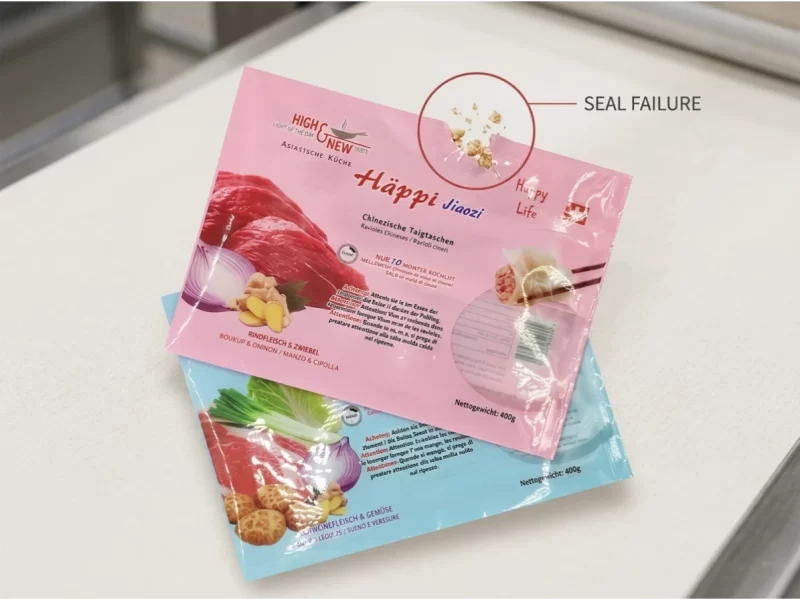
Packaging seals fail when heat-sealing temperature, pressure, dwell time, material compatibility, or sealing-area cleanliness is not properly controlled. These problems cause weak seals, leaks, contamination, and product damage during transportation. Envasado Huiyang ofrece customized OEM/ODM packaging solutions, helping businesses select suitable material structures and packaging formats for reliable sealing and product protection.
Why Is Heat-Seal Quality Important in Flexible Packaging?
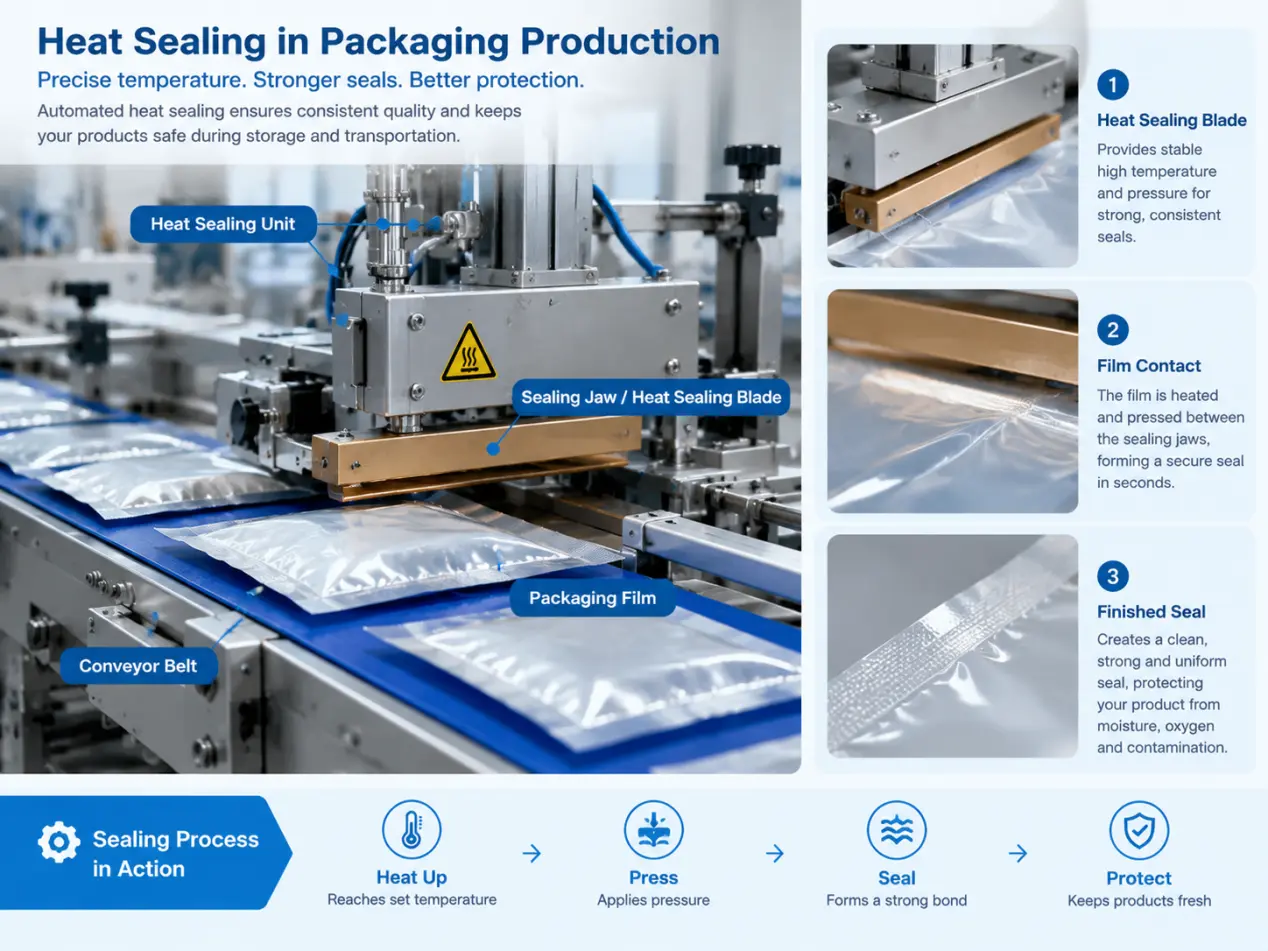
Heat sealing is a critical process in flexible packaging manufacturing. It bonds the inner sealant layers of packaging materials to create a protective closure against moisture, oxygen, contamination, and leakage.
When packaging seals fail, products may lose freshness, leak during transportation, or become unsuitable for sale. For food manufacturers, pet food brands, and consumer goods distributors, these failures can result in product waste, customer complaints, and additional operating costs.
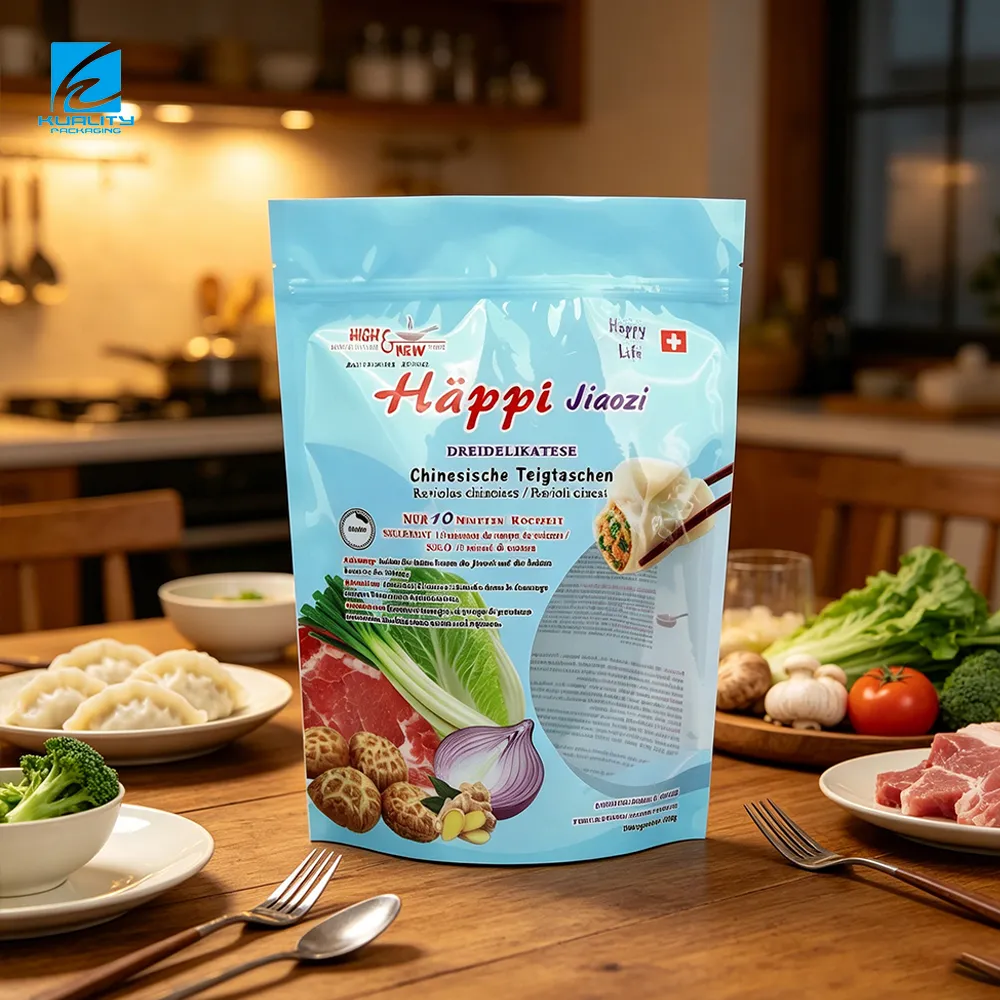
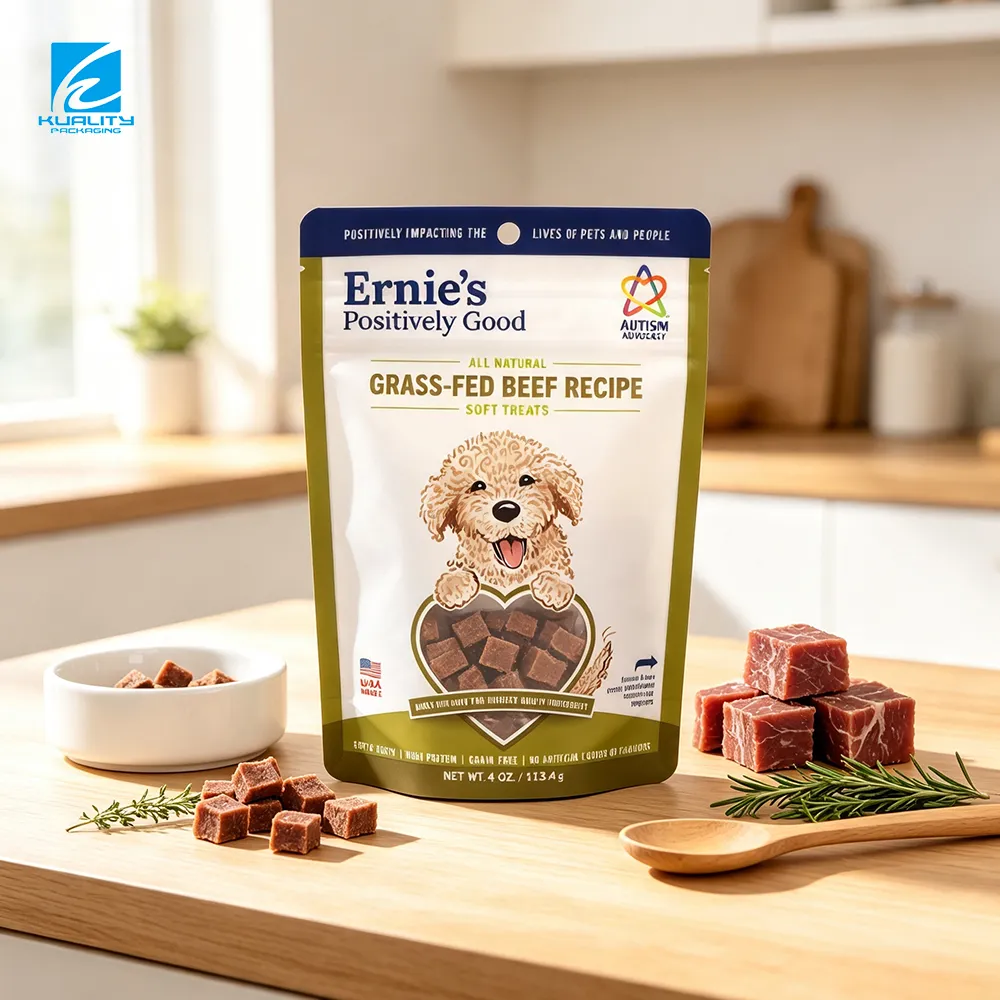
Reliable heat sealing helps manufacturers:
- Maintain product freshness and extend shelf life.
- Reduce leakage and contamination risks.
- Minimize packaging waste and production downtime.
- Protect products during storage and transportation.
- Improve customer satisfaction and brand reputation.
A package seal is therefore more than a closed edge. It is an essential part of the overall packaging protection system.
5 Common Reasons Why Packaging Seals Fail and How to Prevent Them
Understanding why packaging seals fail helps manufacturers identify defects and establish effective quality-control procedures.
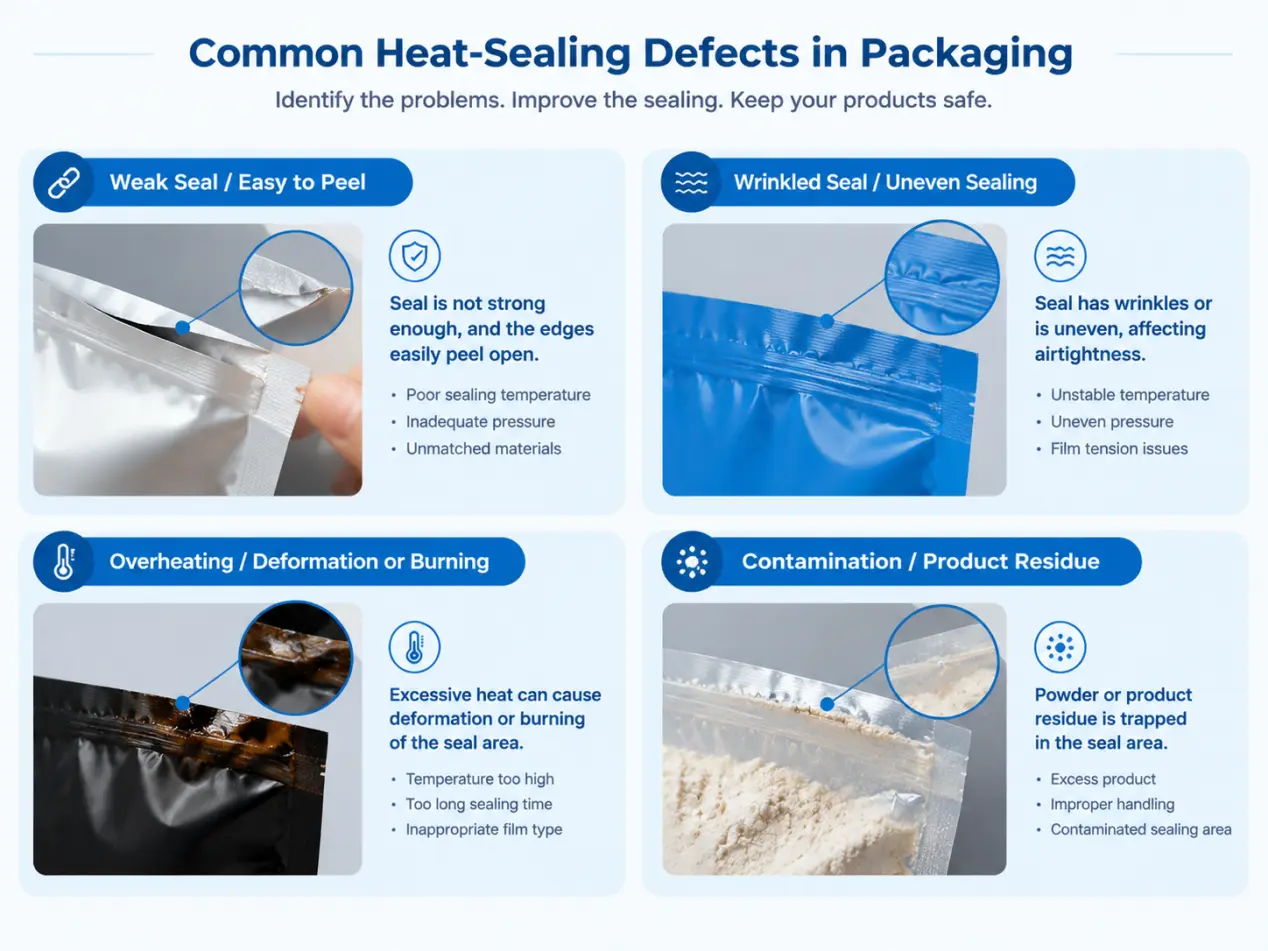
| Common sealing problem | Main causes | Recommended solutions |
|---|---|---|
| Weak or incomplete seals | Low temperature, insufficient pressure, short dwell time | Optimize sealing parameters and conduct seal-strength tests |
| Burned or brittle seals | Excessive temperature or dwell time | Establish a suitable operating window and check heating elements |
| Contamination in sealing areas | Food particles, oil, powder, or liquid residue | Improve filling accuracy and keep sealing areas clean |
| Wrinkles and uneven seals | Misaligned jaws, inconsistent film tension, uneven pressure | Adjust alignment, film tracking, and pressure distribution |
| Seal failure during transportation | Insufficient seal strength, internal pressure, or unsuitable materials | Conduct drop, compression, and transportation tests |
1. Weak or Incomplete Seals
Weak seals occur when the packaging layers do not bond sufficiently. Although the package may appear closed, the sealed edges can open easily under pressure or handling.
Common causes:
- Sealing temperature is too low.
- Dwell time is too short.
- Sealing pressure is insufficient or uneven.
- The material structure is incompatible with the sealing process.
How to prevent it:
Check the recommended sealing temperature range for the packaging material. Adjust temperature, pressure, and dwell time gradually, changing one variable at a time. Verify the results through peel tests or other appropriate seal-strength tests rather than relying on visual inspection alone.
2. Burned, Distorted, or Brittle Seals
Excessive heat can damage the sealant layer, distort the film, and create brittle areas around the sealed edges. Severe overheating may also cause wrinkles, shrinkage, or holes.
Common causes:
- Excessive sealing temperature.
- Overly long dwell time.
- Uneven heat distribution.
How to prevent it:
Establish a stable operating window instead of continuously increasing temperature to solve weak sealing problems. Regularly inspect heating elements, temperature sensors, and sealing-jaw surfaces. Heat-sensitive or thin packaging films require additional sealing trials before mass production.
3. Contamination in the Sealing Area
Food particles, oil, powder, and liquid residue can become trapped between packaging layers. These contaminants prevent proper bonding and create small channels that allow air or liquid to escape.
This problem frequently affects packaging for powders, sauces, snacks, and other products that can easily contaminate the sealing area.
How to prevent it:
- Improve filling accuracy to reduce product spillage.
- Keep sealing surfaces clean throughout production.
- Adjust filling equipment to prevent products from reaching the sealing zone.
- Check the compatibility of filling and sealing equipment.
For liquid pouches and powder packaging bags, manufacturers must ensure that the filling process and sealing system work together effectively.
4. Wrinkles, Channels, and Uneven Seals
Wrinkles and uneven sealing surfaces can create leakage paths even when the temperature is correct. These defects usually result from misaligned sealing jaws, inconsistent film tension, incorrect bag positioning, or uneven pressure distribution.
The risk increases on high-speed packaging lines because small alignment problems can affect many packages within a short production period.
How to prevent it:
Inspect sealing-jaw alignment, film tracking, and tension settings. Maintain consistent pressure distribution and perform regular equipment maintenance. For stand-up pouches and other premade bags, ensure that each pouch enters the sealing station in the correct position.
5. Seal Failure During Transportation
Some packages pass initial inspection but fail after filling, stacking, vibration, or transportation. This happens because seals must withstand actual distribution conditions rather than simply look acceptable immediately after sealing.
Common causes:
- Insufficient seal strength.
- Sharp product edges.
- Excessive internal pressure.
- Unsuitable packaging structures.
- Mechanical damage during handling.
How to prevent it:
Conduct drop testing, compression testing, and transportation simulation under conditions relevant to the actual product and distribution channel. Evaluate both packaging materials and sealed edges, particularly for e-commerce shipments and long-distance transportation.
3 Key Factors That Affect Heat-Sealing Performance
When investigating why packaging seals fail, manufacturers should evaluate three major process variables and the packaging structure itself.
1. Temperature, Pressure, and Dwell Time
These three variables determine how effectively the sealant layers bond.
| Parameter | Function | Potential problem when improperly controlled |
|---|---|---|
| Temperature | Activates the sealant layer for bonding | Low temperature causes weak seals; excessive heat damages films |
| Presión | Brings sealing surfaces into close contact | Insufficient or uneven pressure creates incomplete seals |
| Tiempo de permanencia | Determines how long heat and pressure are applied | Short dwell time causes incomplete bonding; excessive time can cause thermal damage |
These variables interact with each other. Higher temperatures do not automatically produce stronger seals, and longer dwell times cannot compensate for incompatible packaging materials.
The correct settings depend on film structure, sealant type, machine design, and production speed.
2. Packaging Material Structure
Flexible packaging often combines multiple layers to provide printability, mechanical strength, and barrier protection. However, the inner sealing layer must match the sealing conditions.
Common packaging materials include:
- PE (Polyethylene): Commonly used as a heat-sealing layer.
- PP (Polypropylene): Provides moisture resistance and is used in various packaging structures.
- PET (Polyester): Offers mechanical strength and dimensional stability.
- Aluminum foil: Provides a strong barrier against light, moisture, and oxygen.
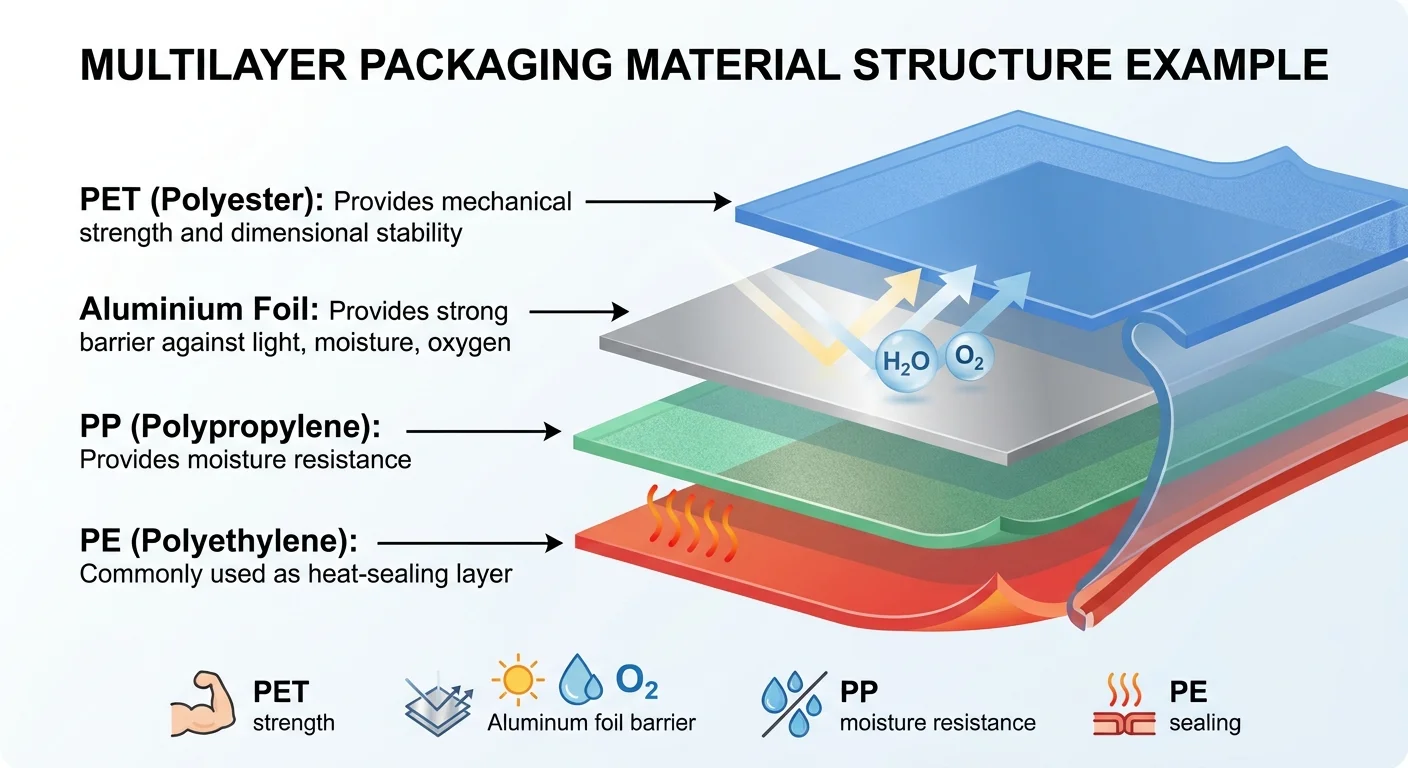
Different material combinations have different sealing characteristics. Before mass production, confirm material specifications with the packaging supplier and conduct sealing trials using the actual production equipment.
3. Machine Condition and Maintenance
Even suitable materials can produce poor seals when equipment is not properly maintained.
Worn sealing jaws, damaged non-stick coatings, inaccurate temperature sensors, and inconsistent pneumatic pressure all affect sealing performance.
Preventive maintenance should include:
- Cleaning sealing surfaces regularly.
- Checking sealing-jaw alignment.
- Verifying temperature readings.
- Inspecting worn or damaged components.
- Checking pressure consistency.
- Recording maintenance results and production changes.
Consistent maintenance helps identify equipment problems before they cause large-scale packaging defects.
How to Test Packaging Seal Integrity
Visual inspection alone cannot confirm whether a package has a reliable seal. Manufacturers should select appropriate testing methods according to packaging structure, product requirements, and intended application.
Two relevant ASTM International standards provide established testing references:
| Método de ensayo | Standard | Propósito |
|---|---|---|
| Seal-strength testing | ASTM F88/F88M-23 | Measures the force required to separate a sealed specimen and identifies its failure mode |
| Bubble leak testing | ASTM F2096 | Detects gross leaks through internal pressurization |
Important technical reference: ASTM F2096 reports a detection sensitivity down to 250 μm (0.010 in.) with an 81% probability under the method’s specified conditions. It is a destructive test and is not suitable for identifying every type of leak or packaging defect.
ASTM F88/F88M-23 also identifies seal strength as a quantitative measure for process validation, capability assessment, and process control.
These standards help packaging manufacturers and buyers establish more objective inspection requirements instead of relying entirely on visual checks.
Customer Project: Improving Packaging Reliability for Pet Food Products
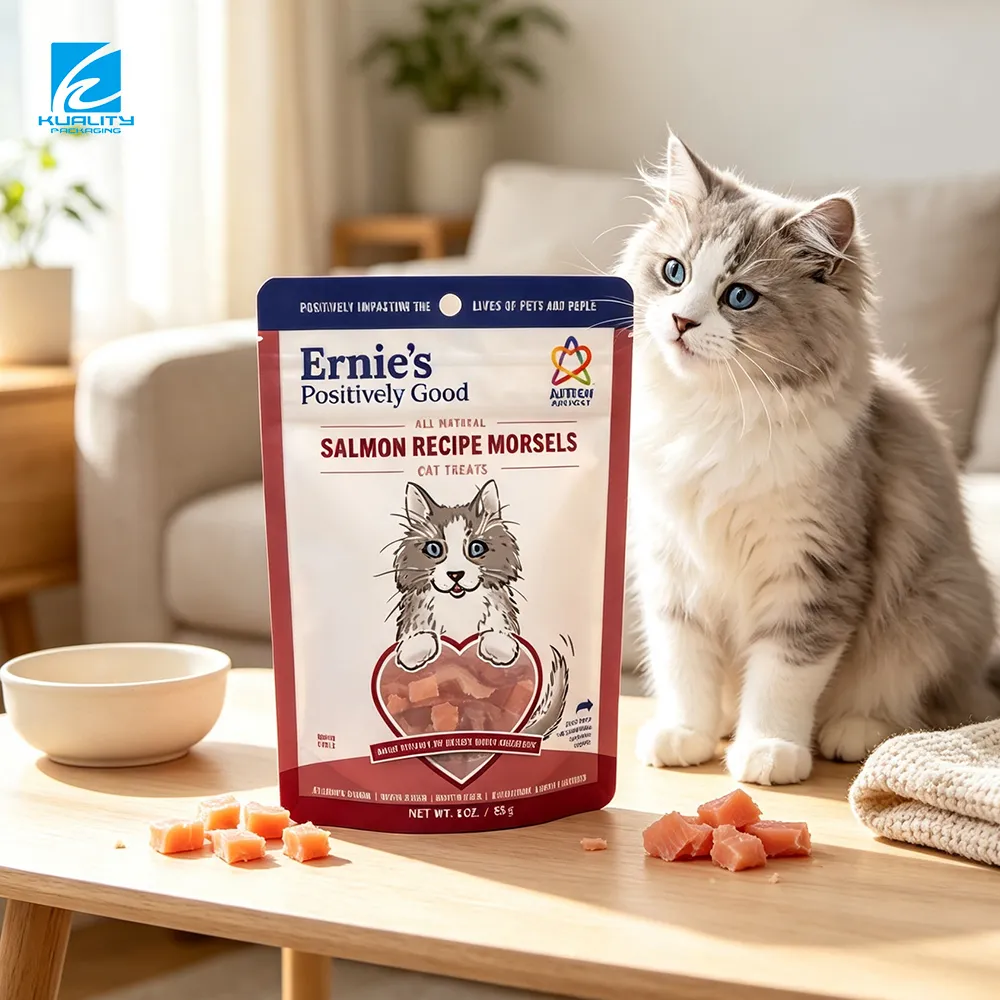
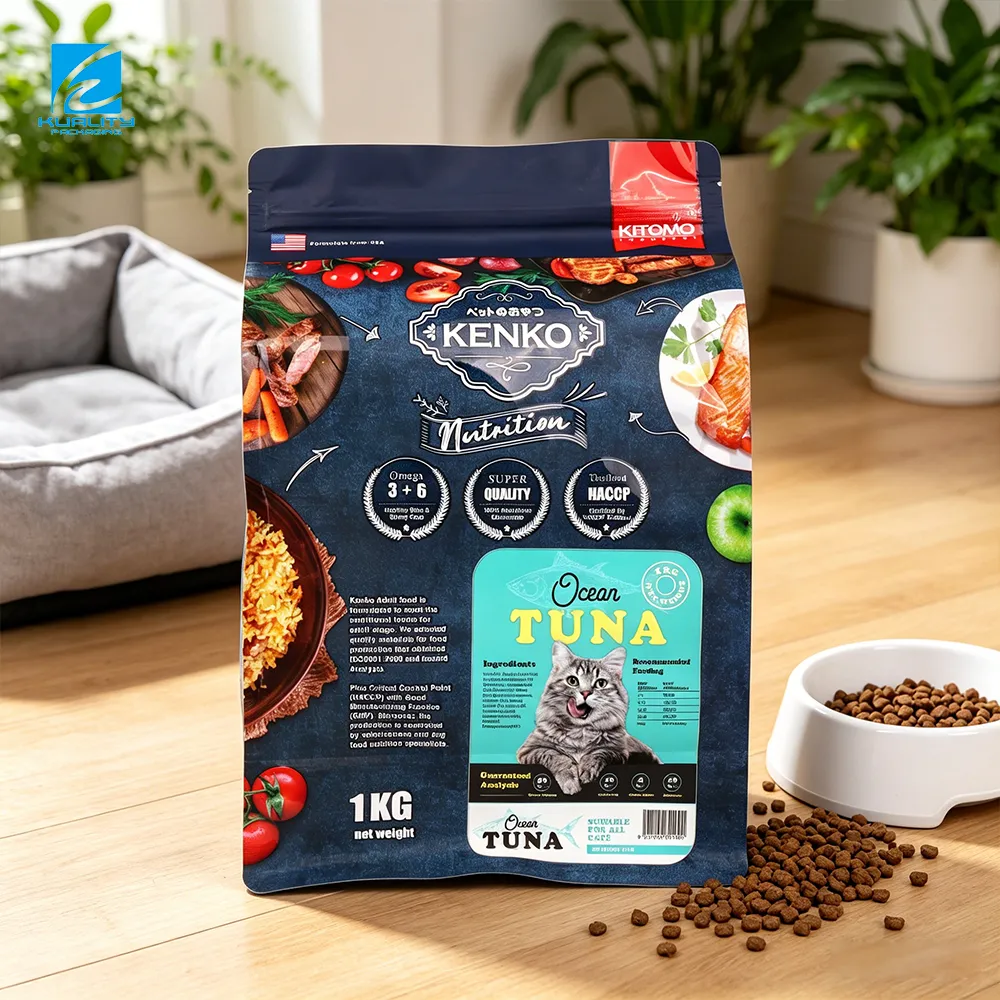
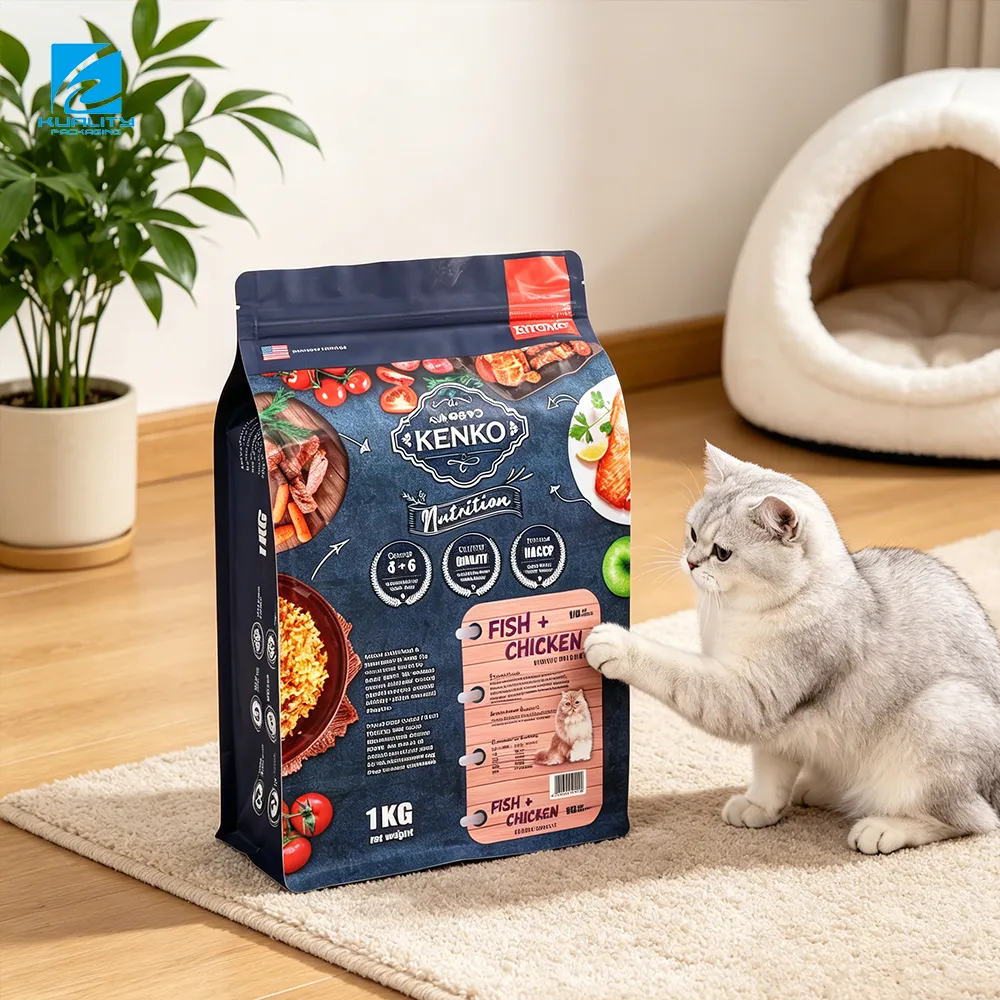
During a previous project, our team at Envasado Huiyang worked with a customer seeking flexible packaging for pet food products intended for online sales.
One major consideration was whether the packaging could maintain its integrity throughout filling, sealing, and delivery.
We discussed the customer’s product requirements and evaluated factors affecting package performance, including the sealing layer, pouch design, and transportation conditions.
The project highlighted an important point: even when suitable materials are selected, inconsistent sealing conditions or poor alignment during production can compromise packaging performance.
For pet food brands, evaluating sealing compatibility and handling requirements during the packaging development stage helps reduce potential problems before mass production.
6 Steps to Prevent Packaging Seal Failure
A systematic quality-control process is more effective than troubleshooting defects only after they appear.
- Confirm material compatibility. Check the sealing-layer specifications and recommended processing range before production.
- Establish the correct operating window. Test temperature, pressure, and dwell time systematically, and record the settings that produce consistent seals.
- Inspect the sealing area. Check for wrinkles, trapped product, uneven edges, and contamination during production.
- Test seal strength regularly. Use appropriate peel, burst, leak, or other validation tests according to package design and product requirements.
- Simulate distribution conditions. Test filled packages for compression, impact, vibration, and other relevant transportation risks.
- Record and analyze defects. Track failure types, production batches, machine settings, and material lots to identify recurring problems and implement corrective actions.
For custom flexible packaging, quality requirements must be considered during material selection and package design, not only after production begins.
How to Choose a Flexible Packaging Supplier for Reliable Sealing
Preventing packaging seal failures starts before packaging reaches the production line. The material structure, sealant layer, bag format, and filling process must work together.
Por ejemplo:
- Vacuum packaging bags require reliable seals to maintain the vacuum environment.
- Bolsas retortables must withstand the thermal processing conditions specified for the product.
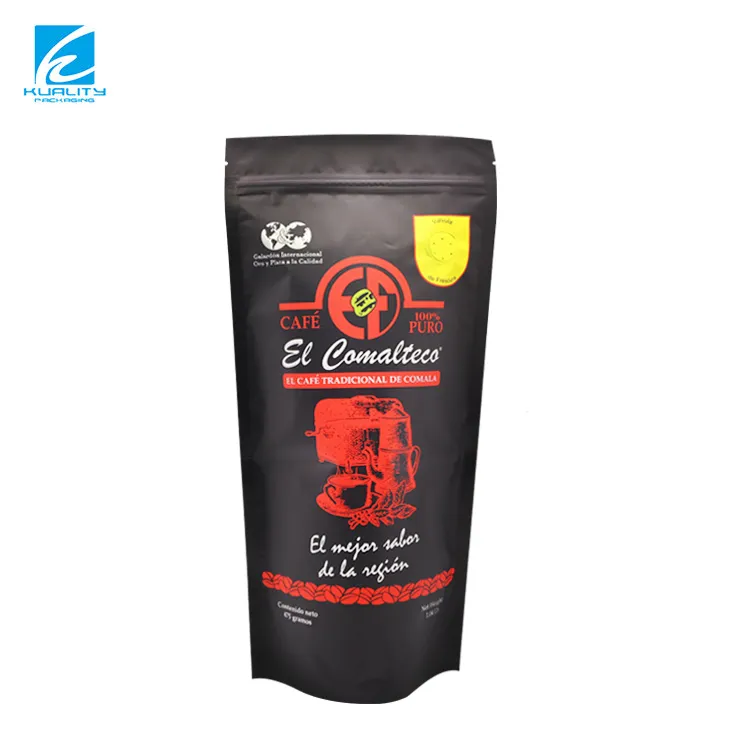
- Coffee bags need suitable barrier materials and properly sealed edges to protect product freshness.
- Liquid pouches require sealing structures compatible with the product and filling conditions.
- Bolsas verticales need consistent sealing performance to withstand filling, stacking, and distribution.



When evaluating a packaging supplier, B2B buyers should ask:
- Can the supplier recommend suitable sealing-layer materials?
- Can the packaging structure match the customer’s filling and sealing equipment?
- Does the supplier have documented quality-control procedures?
- Can the supplier provide material specifications and relevant compliance documentation?
- Can the packaging be customized for different products and distribution conditions?
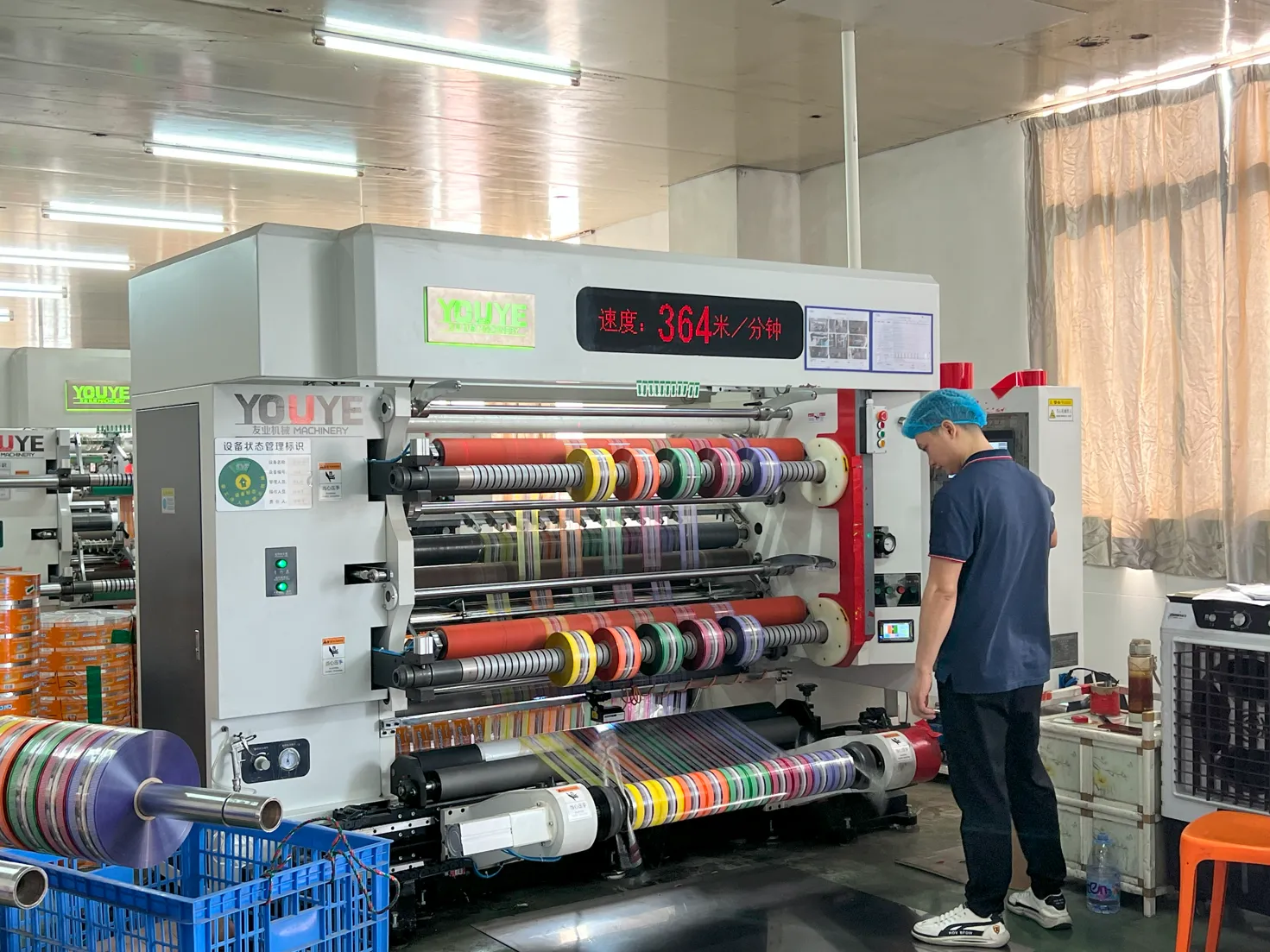
A manufacturer that understands both packaging design and production requirements can help buyers reduce avoidable sealing risks.
Preguntas frecuentes
1. What is the most common cause of heat-seal failure?
When packaging seals fail, Incorrect sealing temperature, insufficient pressure, inadequate dwell time, contamination, and incompatible materials are common causes. The exact cause should be confirmed through systematic testing.
2. Does a higher sealing temperature always create a stronger seal?
No. Excessive heat can damage the sealant layer, distort the film, and create brittle seals. Temperature must be optimized alongside pressure and dwell time.
3. How can manufacturers check whether a package seal is reliable?
Manufacturers can use visual inspection, seal-strength testing, leak testing, burst testing, and transportation simulation. ASTM F88/F88M and ASTM F2096 provide recognized testing references for specific applications.
4. Can packaging materials cause sealing problems?
Yes. An incompatible sealant layer, inconsistent material thickness, or unsuitable multilayer structure can make reliable sealing difficult. Material selection must match the production equipment and sealing requirements.
5. Why do packaging seals fail even when the packaging looks normal?
Tiny channels, trapped product particles, and weak bonding areas may cause leakage even when the sealed edge appears visually acceptable. Appropriate seal-integrity testing is essential.
6. How can B2B buyers reduce packaging seal failures?
Choose a qualified flexible packaging manufacturer, confirm material compatibility, request relevant material specifications, and establish sealing and testing requirements before mass production.
Conclusion: Better Seals Start with Better Process Control
When packaging seals fail, heat-sealing problems can cause leakage, contamination, product damage, and extra costs. Manufacturers can reduce these risks through proper parameter settings, suitable materials, clean sealing areas, regular maintenance, and routine testing.
Since no single setting works for every material, sealing conditions should be tested under actual production conditions. Effective process control helps improve packaging reliability, protect product quality, and enhance customer satisfaction.
Envasado Huiyang is an experienced flexible packaging manufacturer with more than 25 years of industry experience, specializing in OEM/ODM flexible packaging solutions for global businesses.
With advanced high-speed printing, laminating, and bag-making equipment, we provide integrated services covering material development, design support, and finished packaging production. Our quality management system follows ISO 9001 requirements, and we work with relevant SGS and FDA standards and documentation requirements.
Our product range includes stand-up pouches, spout pouches, vacuum bags, pillow bags, flat-bottom bags, cold seal films, and rollstock films for food, daily chemical, pharmaceutical, and cosmetic applications.
Whether you are sourcing custom food packaging, pet food bags, liquid pouches, or high-barrier flexible packaging, our team can help evaluate your product requirements and recommend suitable packaging structures.
Póngase en contacto con Envasado Huiyang today to discuss your OEM/ODM packaging project and request a customized quotation.
-

Bolsas a granel ecológicas con cremallera para el envasado de pan y bollería
-

Bolsas para envasar miel a granel con lengüeta autoadhesiva y cremallera, materiales compuestos ecológicos
-
Bolsas de Caramelos Personalizadas a Granel, Bolsas con Cremallera y Protección Antihumedad
-
Embalaje a granel para palomitas de maíz Bolsa Standup Envases flexibles ecológicos


