


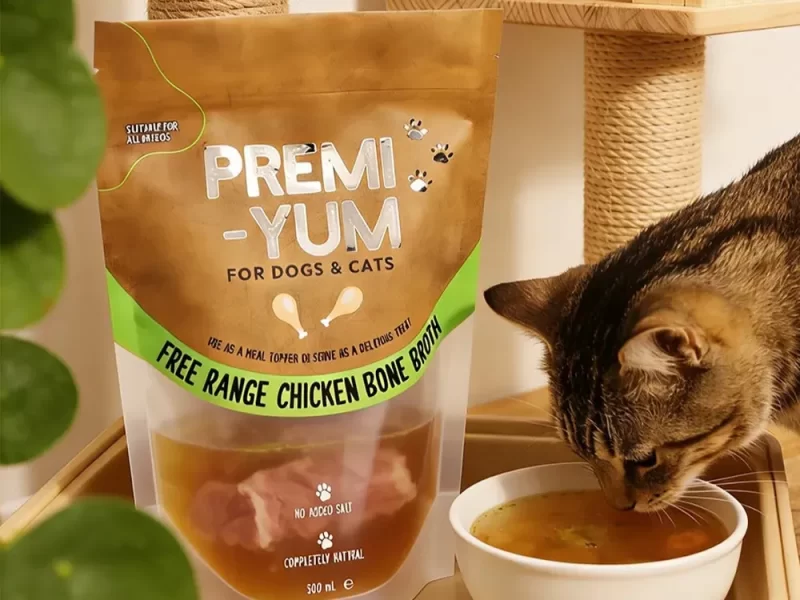
In today’s rapidly expanding pet food market, packaging plays a critical role in ensuring pet food packaging bags safety, extending shelf life, and strengthening brand competitiveness. At Embalagens Huiyang, we understand that packaging is not just a container—it is a key factor in product protection, logistics efficiency, and consumer experience.
Como professional pet food packaging bag manufacturer, Embalagens Huiyang has worked with global pet food brands to solve real-world packaging challenges. In this guide, we break down the most common problems in pet food packaging bags and provide proven solutions, supported by practical case studies.
Why Pet Food Packaging Matters
Pet food packaging must do more than simply hold the product. A high-quality packaging solution should deliver:
- Strong sealing performance to prevent air and moisture ingress
- High barrier protection against oxygen, humidity, and contaminants
- Excellent durability during transportation and storage
- Attractive shelf presentation to enhance brand image
- Consumer-friendly features such as resealable closures
However, many brands encounter issues in real production and distribution. Let’s explore how to solve them.
Common Types of Pet Food Packaging Bags
Before addressing common problems, it’s important to understand the main packaging formats used in the pet food industry.
1. Bolsa de pé
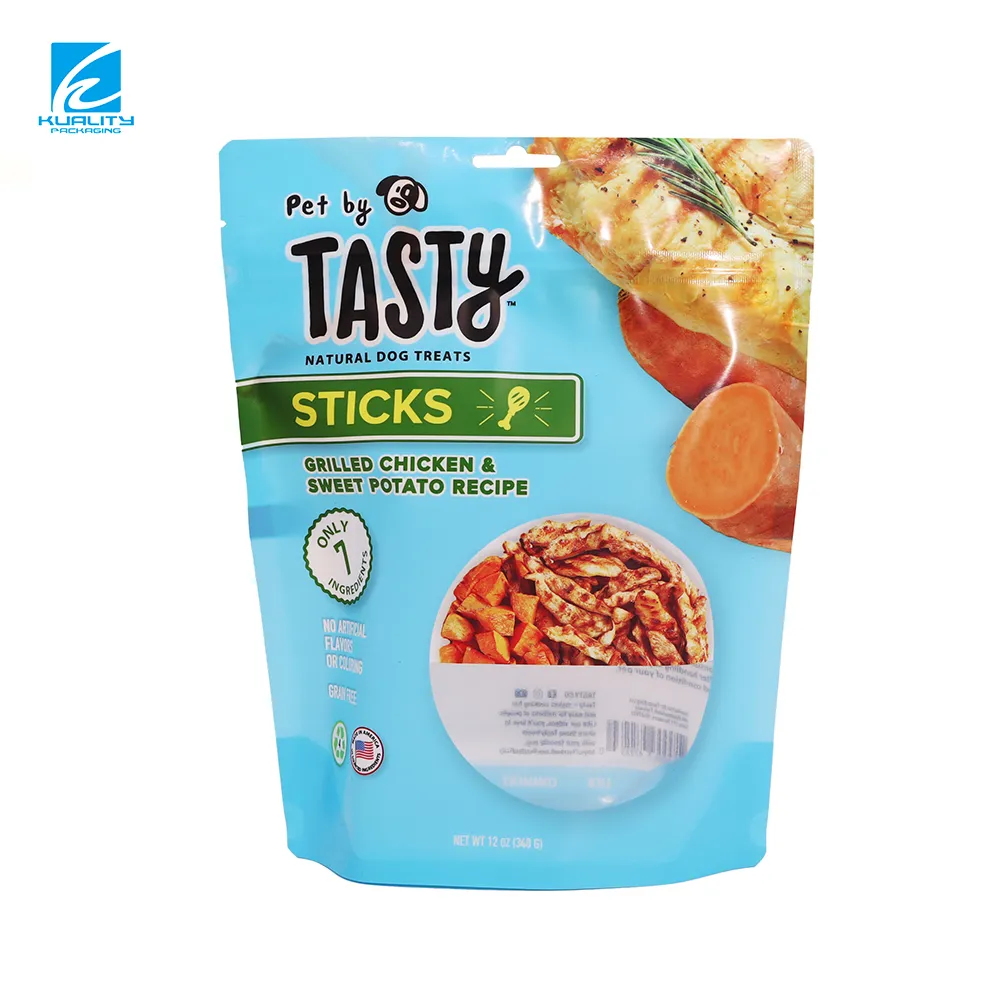
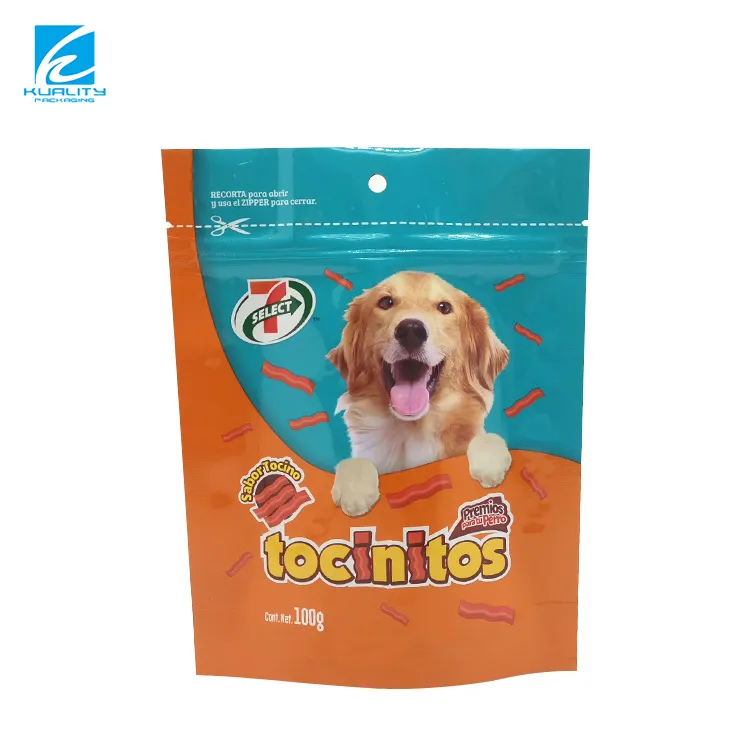
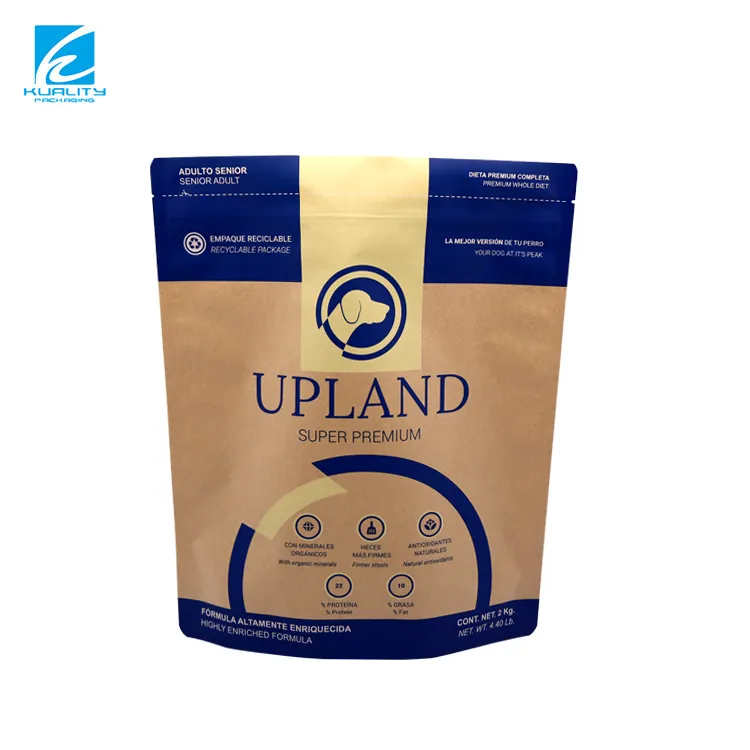
Stand-up pouches are widely used thanks to their versatility and cost efficiency.
Vantagens:
- Excellent shelf display
- Lightweight and space-saving
- Rentável
Applications:
- Pet treats
- Small dog food packs
- Cat food
2. Flat Bottom Bag (Eight-Side Seal Bag)
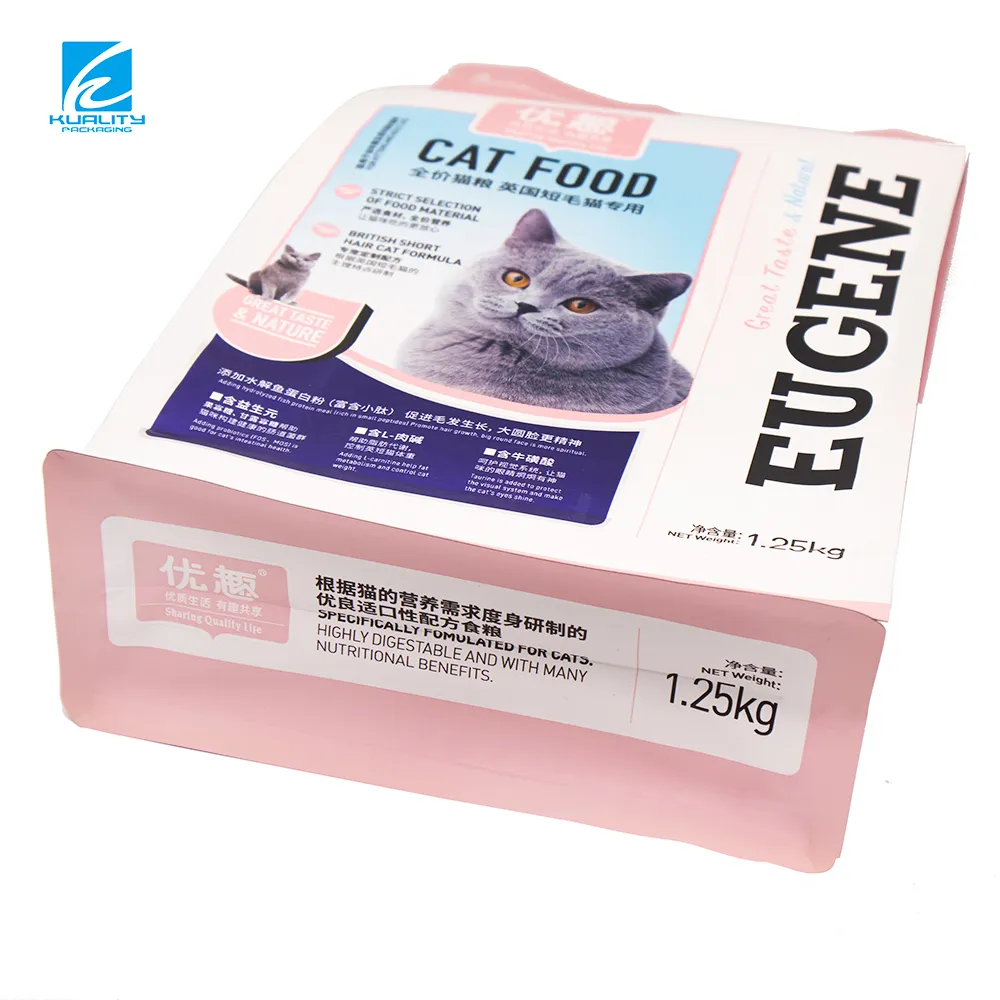
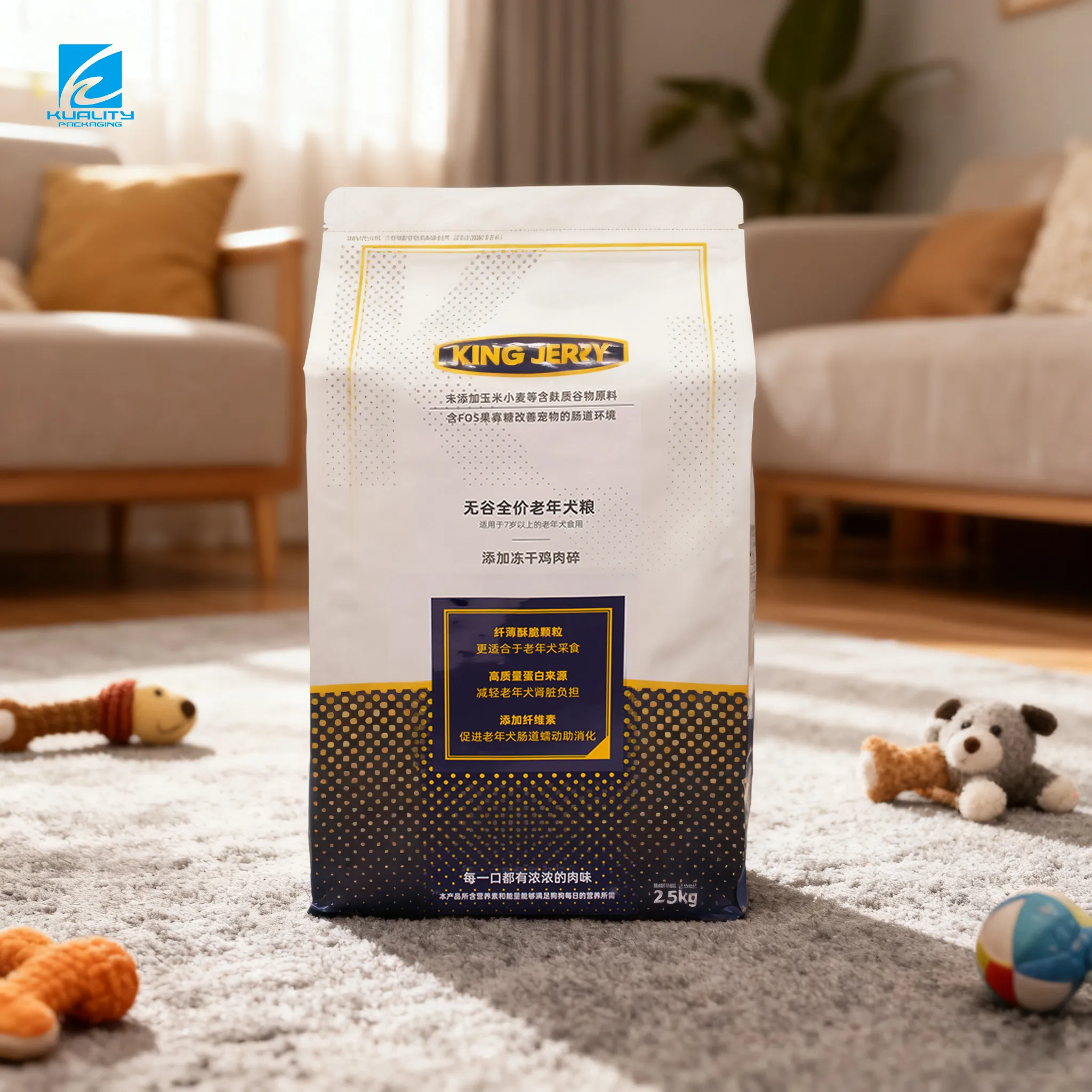
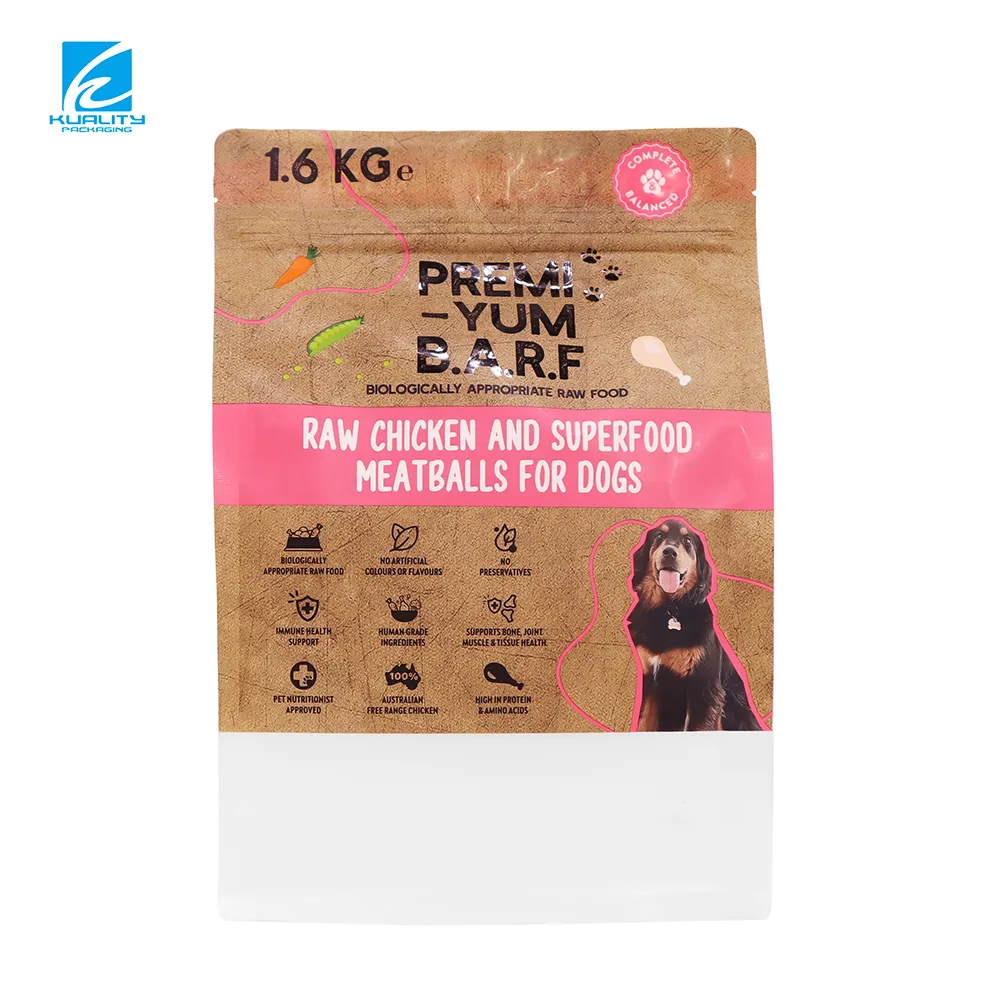
Flat bottom bags offer premium appearance and superior stability.
Vantagens:
- Strong shelf presence
- Large printable area for branding
- Excellent stability
Applications:
- Premium dog food
- Medium to large packaging sizes
3. Side Gusset Bag
Side gusset bags are ideal for large-capacity packaging.
Vantagens:
- High load-bearing capacity
- Suitable for automated filling
- Efficient for bulk packaging
Applications:
- 5kg–10kg dog food
- Bulk pet food products
Common Problems in Pet Food Packaging and Solutions
1. Poor Sealing Leading to Moisture Contamination
Pet food is highly sensitive to moisture and oxygen. Poor sealing can result in:
- Product spoilage
- Off-flavors or odor changes
- Nutritional degradation
Solutions:
- Use high-barrier structures such as PET/AL/PE
- Optimize heat sealing parameters
- Add resealable zippers
- Include oxygen absorbers or desiccants
Case Study (Huiyang Packaging):
A premium freeze-dried pet snack brand experienced moisture issues using PET/PE packaging.
After upgrading to PET/AL/PE:
- Shelf life increased from 9 to 12 months
- Moisture issues were eliminated
- Customer complaints significantly decreased
2. Packaging Bags Tearing or Bursting
This is common for large dog food packaging during transportation.
Causes:
- Low puncture resistance
- Thin materials
- Pressure from hard kibble
Solutions:
- Add nylon (NY) layers
- Use PET/NY/PE structures
- Perform drop and compression testing
Case Study (Huiyang Packaging):
A 10kg dog food product suffered frequent damage with PET/PE bags.
After switching to PET/NY/PE:
- Damage rate dropped from 6% to below 1.5%
- Logistics losses were reduced
- Return rates decreased
3. Inconsistent Printing Colors
Color inconsistency can damage brand identity and reduce shelf appeal.
Solutions:
- Use Pantone color standards
- Confirm printed samples before production
- Partner with experienced manufacturers like Huiyang Packaging
4. Poor Zipper Performance
Low-quality zippers affect user experience.
Common issues:
- Difficult to open
- Weak resealing
- Short lifespan
Solutions:
- Use food-grade PE zippers
- Optimize sealing temperatures
- Add tear notches for easy opening
5. Packaging Cannot Stand Upright
Unstable packaging reduces shelf visibility and sales performance.
Solutions:
- Use stand-up pouch designs
- Choose flat bottom structures
- Improve bottom gusset design
Sustainability Trend: Recyclable PE/PE Pet Food Packaging
Sustainability is becoming a key decision factor for global brands. At Embalagens Huiyang, we actively develop eco-friendly solutions.
Mono-Material PE/PE Structure
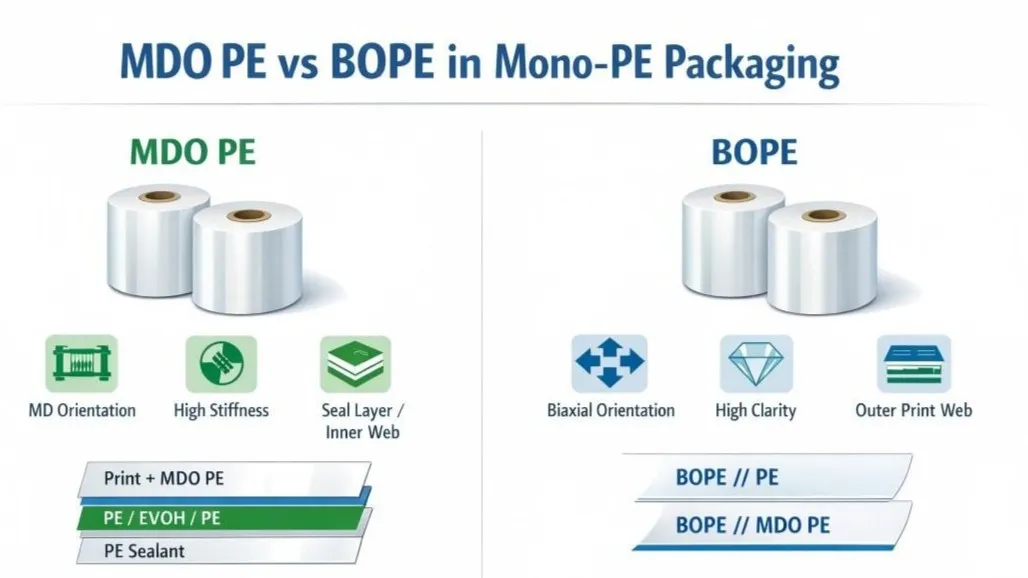
Typical structures:
- MDO-PE / PE
- BOPE / PE
Vantagens:
- Easier recycling
- Meets sustainability regulations
- Maintains good mechanical strength
Case Study (Huiyang Packaging):
A European brand replaced PET/PE with PE/PE (Mono-PE):
- Improved recyclability compliance
- Enhanced brand sustainability image
- Increased retail acceptance
FAQ: Pet Food Packaging Bags
What materials are commonly used?
- PET / PE
- PET / AL / PE
- PET / NY / PE
- PE / PE (recyclable)
Each suits different product requirements.
Which packaging is best for dog food?
- Stand-up pouch (small packs)
- Flat bottom bag (premium products)
- Side gusset bag (large capacity)
The choice depends on weight, positioning, and logistics.
Can pet food packaging be eco-friendly?
Yes. Options include:
- Recyclable mono-material PE/PE
- Lightweight structures
- Sustainable materials
Conclusão
Pet food packaging is a key factor in product protection, brand positioning, and customer satisfaction. With extensive industry experience, Embalagens Huiyang helps global brands optimize packaging performance and reduce risks.
When selecting packaging solutions, consider:
- Sealing performance
- Material strength
- Barrier protection
- Shelf presentation
- Sustentabilidade
By working with a professional manufacturer like Embalagens Huiyang, pet food brands can avoid common packaging problems and achieve long-term success in competitive markets.
Looking for reliable pet food packaging solutions?
Contacto Embalagens Huiyang today to get free design support and samples, and discover customized packaging tailored to your brand.