



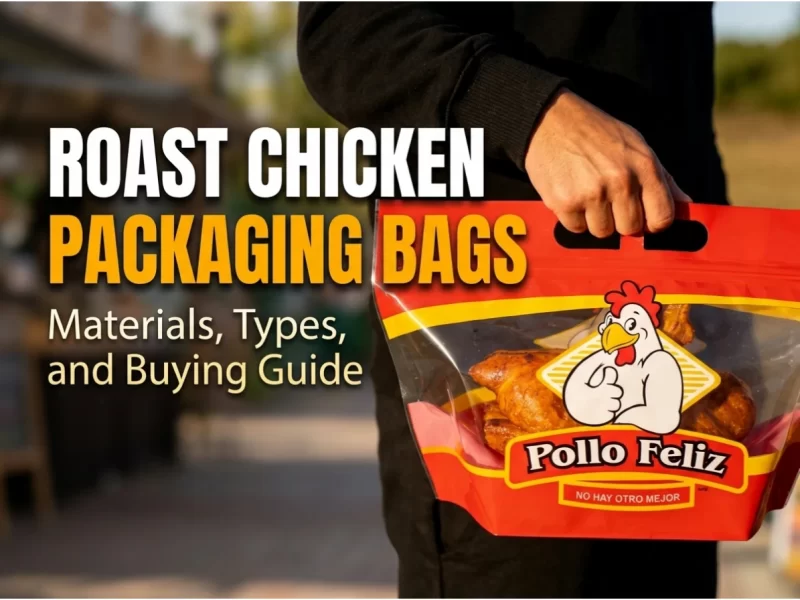
Roast chicken packaging bags need to provide reliable sealing, grease resistance, mechanical strength, and food-contact safety. The right material and bag structure depend on whether chicken is packed hot, cooled for refrigerated storage, or prepared for retail distribution. With over 25 years of flexible packaging experience, Huiyang Verpackung provides OEM/ODM solutions, helping food brands and wholesalers develop customized packaging based on product requirements, storage conditions, and distribution needs.
What Are Roast Chicken Packaging Bags and Why Do They Matter?
Roast chicken packaging bags are food-grade flexible packaging solutions designed to contain whole roasted chickens or chicken portions while protecting them during handling, storage, and distribution. Their construction must match the product’s temperature, oil content, weight, and intended shelf life.

Roast chicken is a popular ready-to-eat food, but its packaging presents several challenges. Heat, natural oils, moisture, and the weight of a whole chicken can affect package performance. A poorly selected bag may develop oil stains, weak seals, leaks, or physical damage during delivery.
High-quality packaging serves four main purposes:
- Product protection: Helps prevent external contamination and reduces exposure to moisture and oxygen when the selected structure provides the required barrier.
- Leak prevention: Reduces grease and liquid leakage through the film and sealed edges.
- Transportation support: Provides sufficient strength to withstand filling, stacking, handling, and delivery.
- Brand presentation: Uses clear windows, printed graphics, and customized designs to improve shelf appeal.
The packaging requirements also change according to the product’s condition. Hot takeaway chicken, chilled cooked chicken, and frozen chicken products should not automatically use the same packaging structure.
What Materials Are Best for Roast Chicken Packaging Bags?
The best material depends on the packaging temperature, grease exposure, barrier requirements, and sealing process. PET/PE, PA/PE, and PET/PA/PE are potential laminated structures, but each must be validated for its intended food-contact conditions.
| Materialaufbau | Main Advantages | Suitable Applications |
|---|---|---|
| PET/PE | Good printability, flexibility, and heat-sealing options | General cooked-food packaging under validated conditions |
| PA/PE (NY/PE) | Good toughness and puncture resistance | Chicken products with greater mechanical demands |
| PET/PA/PE | Combines printability, toughness, and sealing functionality | More demanding multilayer packaging applications |
1. PET/PE Laminated Film
PET/PE is a widely used flexible packaging structure. PET provides a suitable printing surface and dimensional stability, while PE serves as the heat-sealing layer.
This combination is useful for customized food packaging that requires attractive printing and reliable sealing. However, the exact PE grade, adhesive system, and laminate construction must be selected according to the intended filling temperature and food-contact conditions.
2. PA/PE (Nylon/PE) Film
PA/PE combines the toughness of nylon with the heat-sealing properties of PE. Nylon offers good resistance to punctures and mechanical stress, making it useful when packaging products with bones or irregular shapes.
This structure is particularly worth evaluating for vacuum-packed cooked chicken after appropriate cooling. It is not automatically suitable for hot filling or high-temperature processing.
3. PET/PA/PE Multilayer Film
PET/PA/PE combines three functional layers to address different packaging requirements. PET supports printing and dimensional stability, PA improves toughness, and PE provides the sealing layer.
For businesses that need both attractive branding and dependable package performance, this structure offers a flexible starting point for custom development.
Important material selection note: A material name alone does not establish temperature suitability. Buyers should request technical data and verify the finished laminate, including adhesives and sealant layers, under the actual filling, storage, and distribution conditions.
What Types of Roast Chicken Packaging Bags Are Available?
Different roast chicken packaging bags serve different distribution and presentation needs. Stand-up pouches, flat pouches, vacuum bags, and custom-printed bags are common formats to evaluate when developing a packaging solution.
| Verpackungsart | Key Characteristics | Typical Application |
|---|---|---|
| Stand-Up-Beutel | Bottom gusset provides an upright structure | Retail-ready chicken products |
| Vakuumverpackungsbeutel | Designed for air removal and close product contact | Chilled cooked chicken |
| Flat Pouches | Simple structure with flexible sizing options | Chicken portions and smaller products |
| Custom Printed Bags | Brand graphics and customized dimensions | Private-label and branded food products |
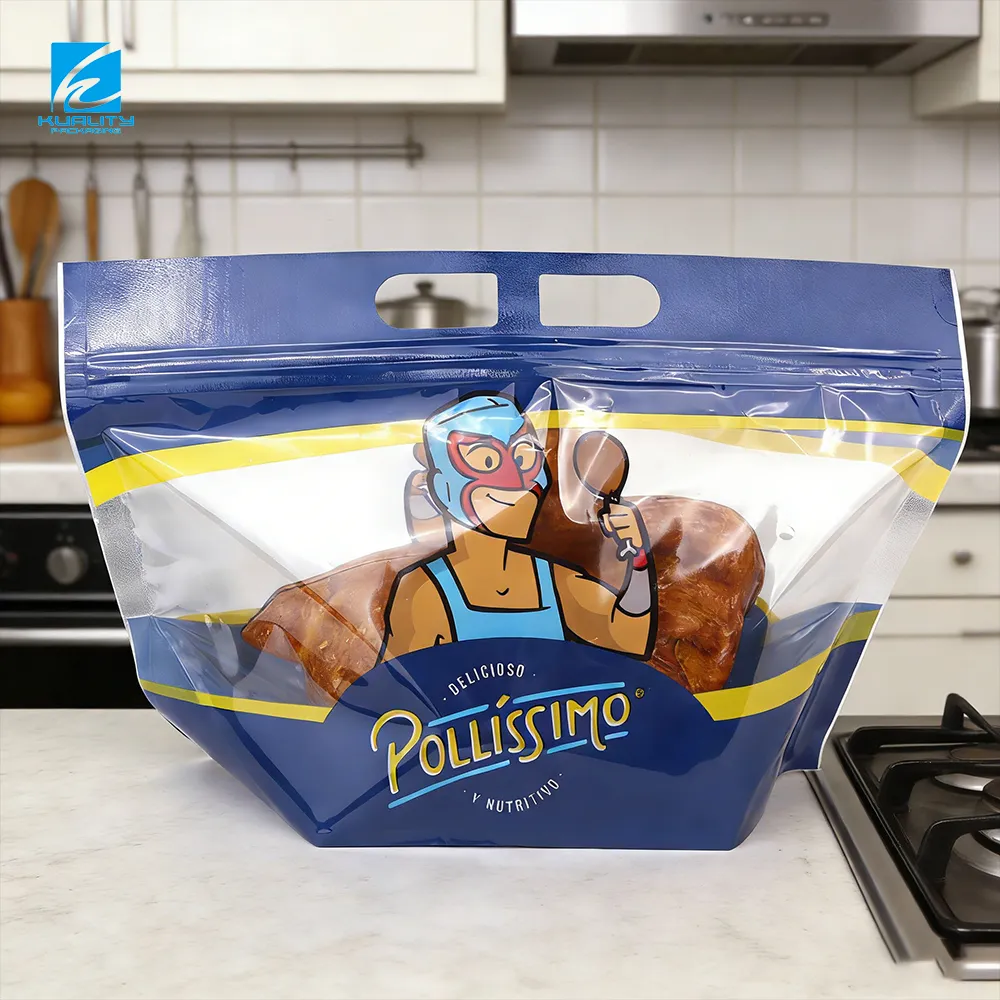
1. Stand-Up Pouches
Stand-up pouches feature a bottom gusset that allows the package to stand upright. This format offers a practical presentation option for retail products.
Brands can customize the dimensions, printing, and optional functional features according to the chicken product. However, a whole roasted chicken may require a larger and stronger structure than ordinary stand-up food pouches.
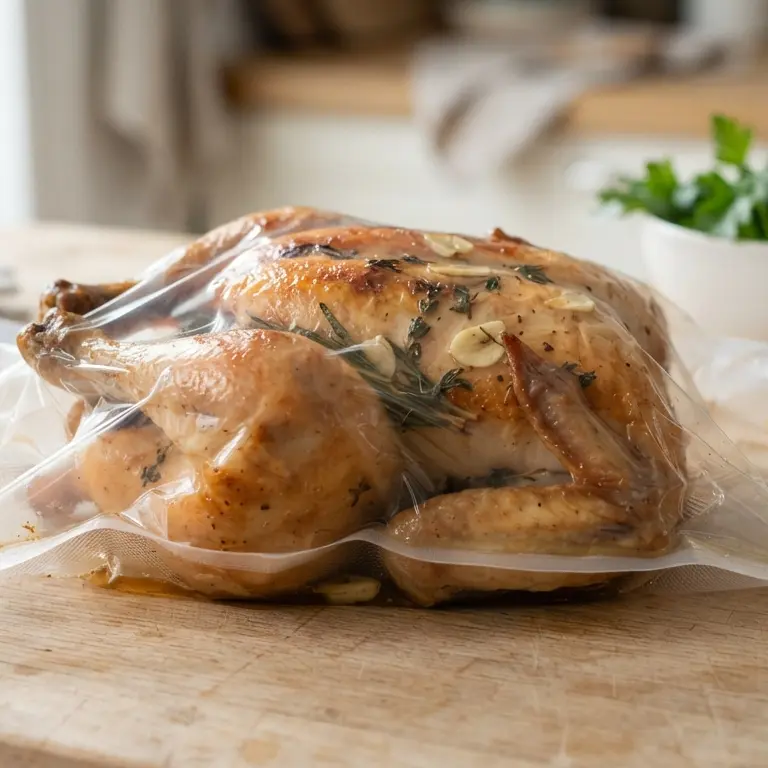
2. Vacuum Packaging Bags
Vacuum packaging removes air from the package before sealing. It can help reduce oxygen exposure and is commonly used for cooked meat products that have been properly cooled.
The film needs suitable flexibility, puncture resistance, and sealing performance. More importantly, vacuum packaging does not replace proper cooking, cooling, refrigeration, or shelf-life validation.
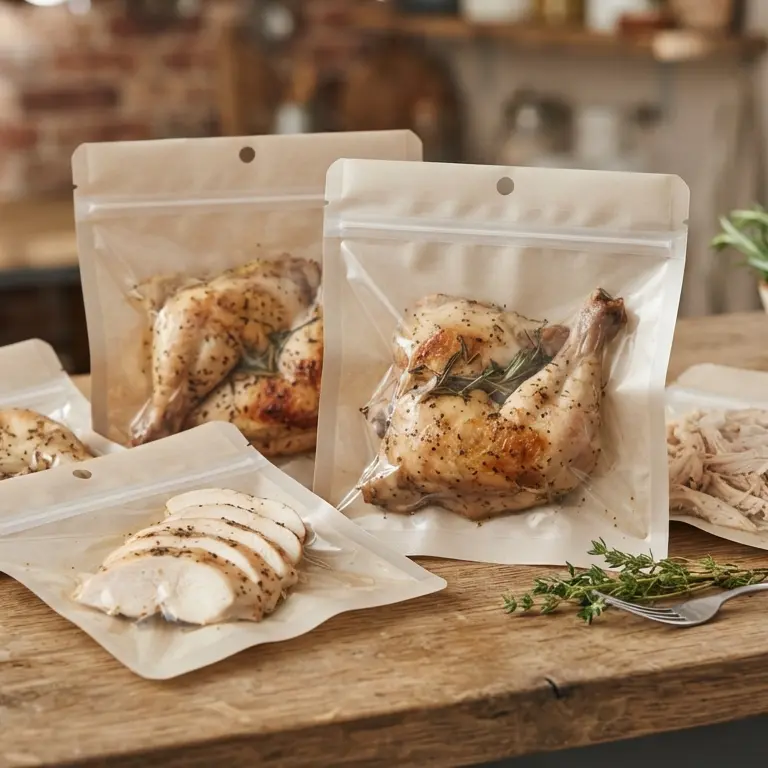
3. Flat Pouches
Flat pouches offer a straightforward packaging structure without a bottom gusset. Their simple construction makes them suitable for products with specific size and packaging requirements.
They can be customized in different dimensions, thicknesses, and laminate structures to accommodate chicken portions and other cooked poultry products.
4. Custom Printed Packaging Bags
Custom printing helps food brands distinguish their products in competitive retail environments. Businesses can incorporate logos, product information, brand colors, and attractive food photography.
For wholesalers and private-label buyers, customized packaging also provides an opportunity to develop consistent product presentation across different retail channels.

What Features Should High-Quality Roast Chicken Packaging Bags Have?
High-quality roast chicken packaging bags should deliver six essential features: suitable temperature resistance, grease protection, moisture management, reliable sealing, mechanical strength, and verified food-contact compliance.
1. Temperature Suitability
Temperature is one of the most important factors in packaging selection.
A bag intended for chilled chicken does not necessarily withstand freshly roasted chicken. Buyers must identify the actual filling temperature and whether the product will undergo hot holding, cooling, refrigeration, freezing, or reheating.
The complete packaging structure should be tested under the intended conditions before mass production.
2. Grease and Moisture Resistance
Roasted chicken naturally releases oil and moisture. Packaging must prevent these substances from penetrating the film or weakening the package.
Suitable laminate structures help maintain a cleaner exterior and protect the product throughout handling and distribution.
3. Reliable Heat Sealing
The sealing area is a critical part of package integrity. Oil, moisture, and food particles trapped in the seal can create weak points and increase leakage risks.
Buyers should evaluate sealing strength, seal consistency, and resistance to leakage under actual production conditions.
ASTM International’s ASTM F88/F88M standard provides a recognized method for measuring the strength of seals in flexible barrier materials.
4. Puncture and Tear Resistance
Whole chickens contain bones and irregular surfaces that can place pressure on packaging during filling and transportation.
A suitable film structure should withstand these mechanical demands without tearing or developing pinholes. Material thickness, laminate construction, and package dimensions all contribute to overall performance.
5. Food-Contact Compliance
Packaging materials must be suitable for their intended food-contact applications. This includes evaluating the film, adhesives, inks, and other components that may contact food directly or indirectly.
The U.S. FDA’s food packaging guidance explains that food-contact substances must be authorized for their intended uses when required under applicable U.S. regulations.
International buyers should also verify the applicable requirements in their destination markets.
6. Attractive Printing and Branding
Packaging influences how customers recognize and evaluate food products. High-quality printing helps communicate brand identity and product information.
Businesses can customize packaging with product images, logos, colors, and other design elements to create a consistent retail presentation.


How Can Businesses Choose the Right Roast Chicken Packaging Bags?
Businesses should select roast chicken packaging bags through a structured evaluation of product conditions, packaging processes, material performance, and purchasing requirements. Following these steps helps reduce material mismatches and production problems.
Step 1: Identify the Product and Filling Temperature
Determine whether the packaging is intended for freshly roasted chicken, cooled cooked chicken, or frozen chicken products.
Record the actual product temperature at the point of filling. Do not use cooking temperature as a substitute for packaging temperature.
Step 2: Define Storage and Distribution Conditions
Establish whether products will be sold immediately, held hot, refrigerated, or frozen. Consider transportation time, handling conditions, and expected storage duration.
For reference, the FDA Food Code 2022 specifies that cooked time/temperature control for safety foods should cool from 135°F to 70°F within two hours and reach 41°F or below within six hours in total. These are food-handling requirements, not packaging temperature ratings.
Step 3: Select the Film Structure
Compare PET/PE, PA/PE, and other suitable multilayer structures based on sealing performance, toughness, grease exposure, and barrier requirements.
Request material specifications and confirm that the proposed construction matches the actual application.
Step 4: Determine Bag Dimensions and Thickness
Measure the chicken’s dimensions and consider its weight, shape, and required headspace.
The bag must provide enough room for convenient filling and sealing without excessive material or unnecessary stress on the package.
Step 5: Test the Finished Packaging
Before placing a bulk order, conduct trials using the actual product and production equipment.
Evaluate seal strength, leakage, puncture resistance, and package appearance. Check the finished package after handling and transportation simulations.
Step 6: Confirm Customization and Production Requirements
Discuss printing, bag format, thickness, order quantity, and delivery schedules with the manufacturer.
For wholesale buyers and food brands, confirming these details before production helps maintain consistency between samples and mass-produced packaging.
Why Should You Work with a Professional Roast Chicken Packaging Manufacturer?
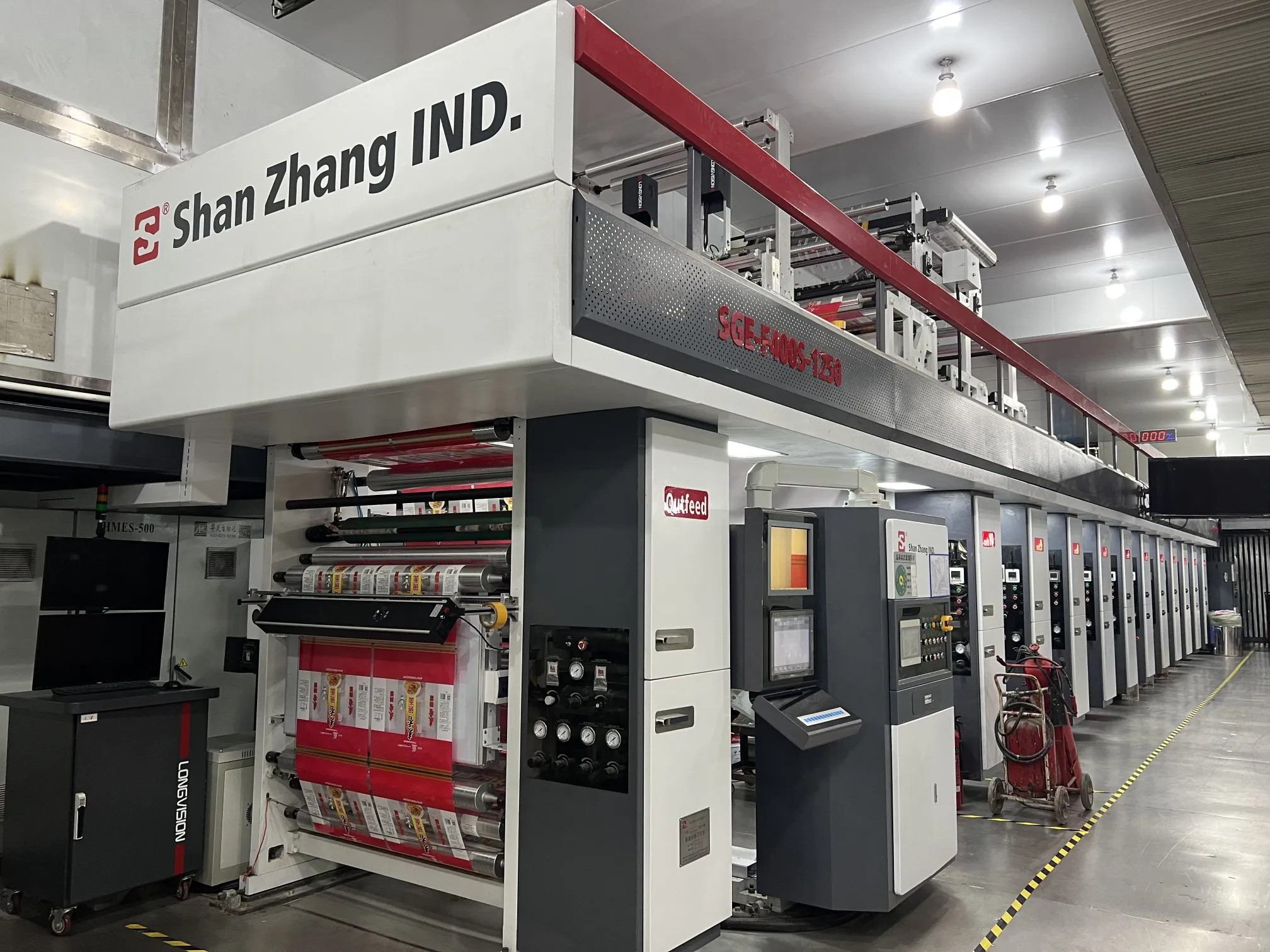
A professional flexible packaging manufacturer helps food businesses develop packaging structures that match their products, processing conditions, and commercial requirements. Direct cooperation also makes it easier to coordinate material selection, printing, lamination, and bag production.
When evaluating a supplier, consider the following capabilities:
- Material Development: The manufacturer should understand different laminate structures and help select materials according to product requirements.
- Printing Capabilities: Advanced printing equipment supports customized brand graphics and consistent visual quality.
- Lamination and Bag Making: Integrated production helps coordinate different manufacturing stages and maintain product consistency.
- Quality Management: Established quality control procedures help monitor materials, production processes, and finished packaging.
- OEM/ODM Support: Customized solutions allow businesses to develop packaging based on specific product dimensions, functional requirements, and branding needs.
For wholesale buyers, working directly with a manufacturer also creates opportunities for long-term cooperation, customized production planning, and more efficient communication.
FAQs
1. What Is the Best Material for Roast Chicken Packaging Bags?
The best material depends on the product temperature and storage requirements. PET/PE is a potential choice for general food packaging, while PA/PE and PET/PA/PE offer additional toughness for applications involving greater mechanical stress. The finished structure must be validated for its intended use.
2. Can Roast Chicken Be Packed While Still Hot?
Yes, but only when the complete packaging structure is specifically designed and validated for the actual filling temperature and contact conditions. Ordinary food pouches should not automatically be used for hot filling.
3. Are Vacuum Bags Suitable for Cooked Chicken?
Yes. Vacuum bags are suitable for many cooked chicken applications after appropriate cooling. The packaging material must provide reliable sealing and suitable barrier performance, while the food must remain under the required temperature controls.
4. How Can Businesses Prevent Grease Leakage?
Choose a laminate structure with suitable grease resistance, ensure consistent heat sealing, and prevent oil or food particles from contaminating the sealing area. Finished-package testing is essential to identify potential leakage problems.
5. Can Roast Chicken Packaging Bags Be Customized?
Yes. Manufacturers can customize bag dimensions, material structures, thicknesses, printing designs, and packaging formats according to product requirements. OEM/ODM services are particularly useful for food brands and wholesale distributors developing private-label products.
Schlussfolgerung
Choosing the right roast chicken packaging bags requires more than selecting a suitable film or attractive bag design. Businesses must consider filling temperature, grease exposure, sealing strength, mechanical protection, food-contact compliance, and distribution conditions. Matching these factors with the right packaging structure helps improve package reliability and supports consistent product presentation.
With more than 25 years of experience in flexible packaging, Huiyang Verpackung specializes in OEM/ODM packaging solutions for global food brands, importers, and wholesalers. Equipped with advanced high-speed printing, lamination, and bag-making equipment, we provide integrated services covering material development, design support, and finished packaging production. Supported by an ISO 9001 quality management system and relevant SGS and FDA-related compliance documentation, Huiyang Verpackung is committed to delivering dependable, customized flexible packaging solutions. Contact Huiyang Verpackung today to discuss your roast chicken packaging requirements and request a customized quotation for your next packaging project.\


