



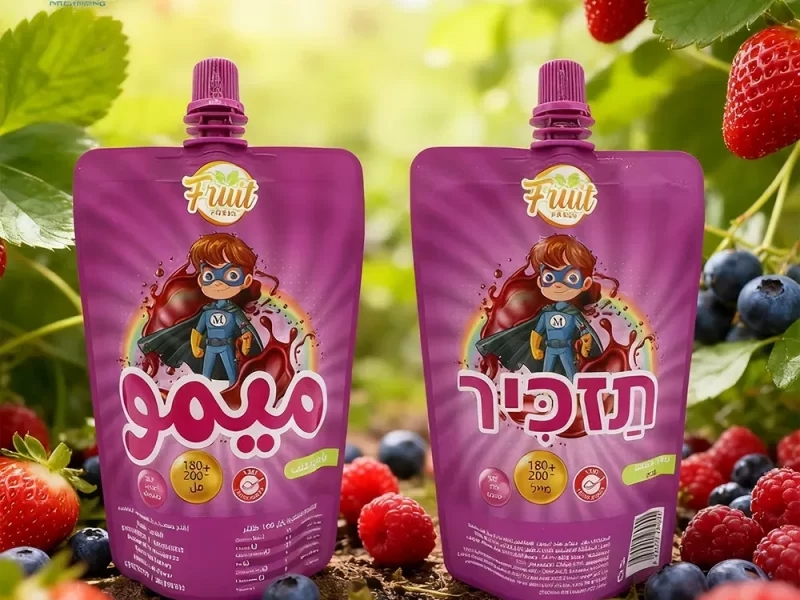
Anyone who’s been around the beverage industry probably notices the same thing we do: the market isn’t what it used to be. It’s no longer just “drinks.” Everything is getting more segmented—functional beverages, sports drinks, kids’ drinks, fruit juices… and each one has its own quirks.
With different formulas, filling processes, and sales scenarios, there’s no way a single flexible beverage packaging solution can work for all of them.
What I’m sharing below basically comes from real projects and daily conversations with different beverage brands. Nothing too theoretical—mostly practical observations.
Flexible Beverage Packaging For Functional Drinks
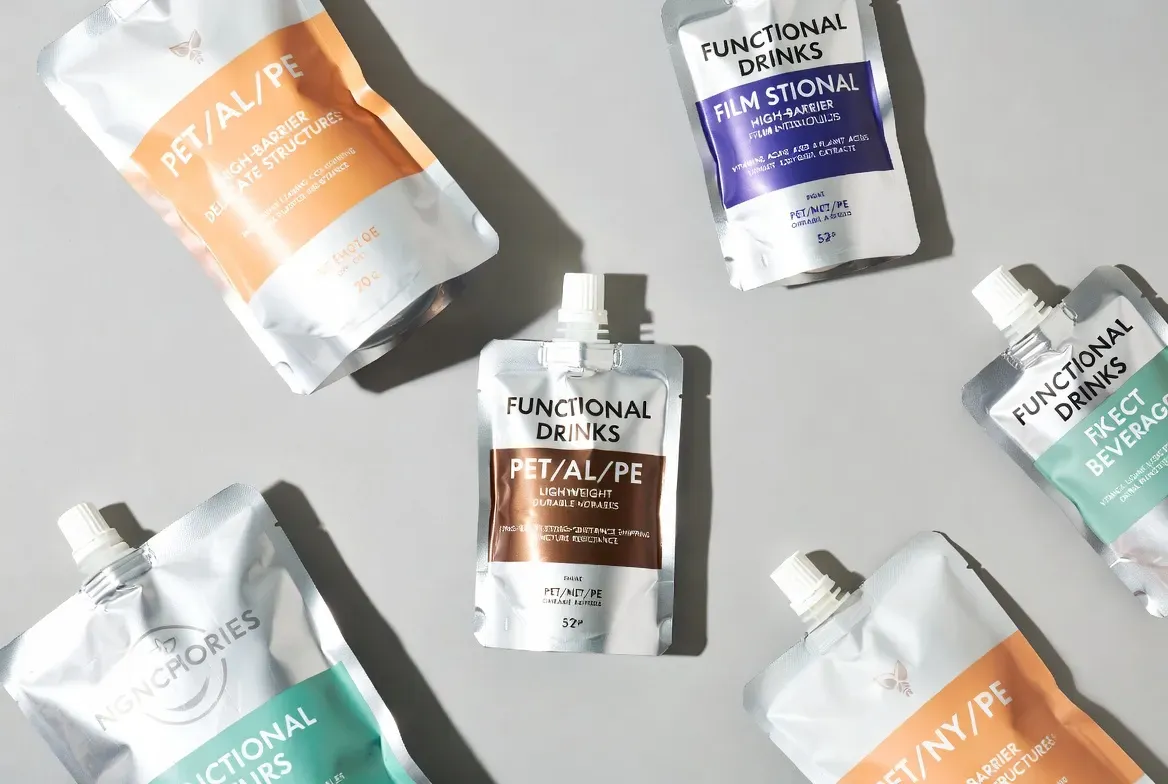
Functional drinks may look simple, but the formulas inside are often quite delicate. Vitamins, amino acids, and plant extracts—these ingredients don’t get along well with light, oxygen, or humidity. Once exposed, the flavor shifts, and the active ingredients lose their effectiveness.
This is why high-barrier film structures, such as PET/AL/PE, are commonly used.
If the product has a thicker texture, contains small particles, or is headed for long-distance shipping, PET/NY/PE becomes the safer choice. The nylon layer offers extra puncture resistance, which matters a lot during transport.
Functional drink consumers tend to be people who drink on the go, so spout pouches and small stand-up pouches are usually more fitting—lightweight, easy to carry, and convenient to drink directly from.
Flexible Beverage Packaging For Sport Drinks
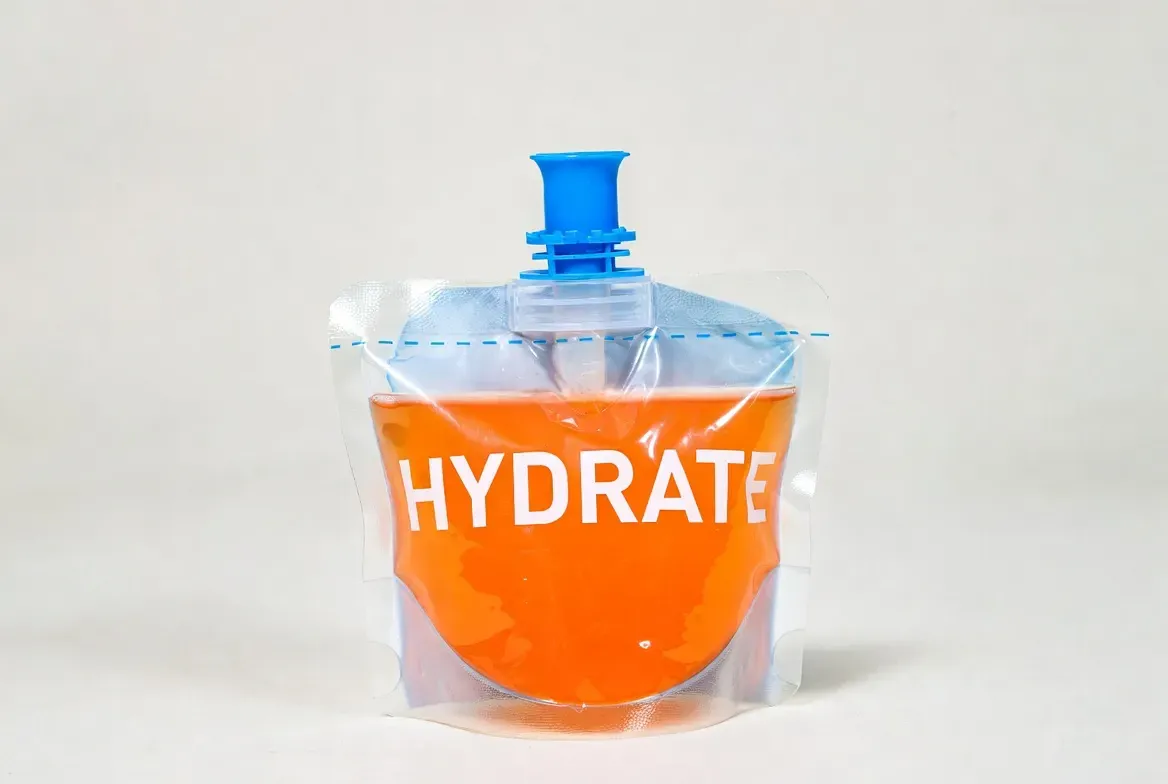
Sports drinks are used in a very different context. People rarely sit still to drink them. They’re tossed into backpacks, squeezed during workouts, carried outdoors, and handled with little care. Bending, twisting, and dropping are pretty normal.
Because of this, the packaging needs to be durable. Flexible packaging is naturally light, but the structure needs to resist pressure and rough handling. Multi-layer laminations are commonly used because they significantly improve durability without adding weight.
Many sports drinks rely on their bright colors for flavor recognition, so brands often choose transparent or semi-transparent films, allowing consumers to see the drink. For this category, visibility is a real advantage.
Flexible Beverage Packaging For Kids’ Drinks
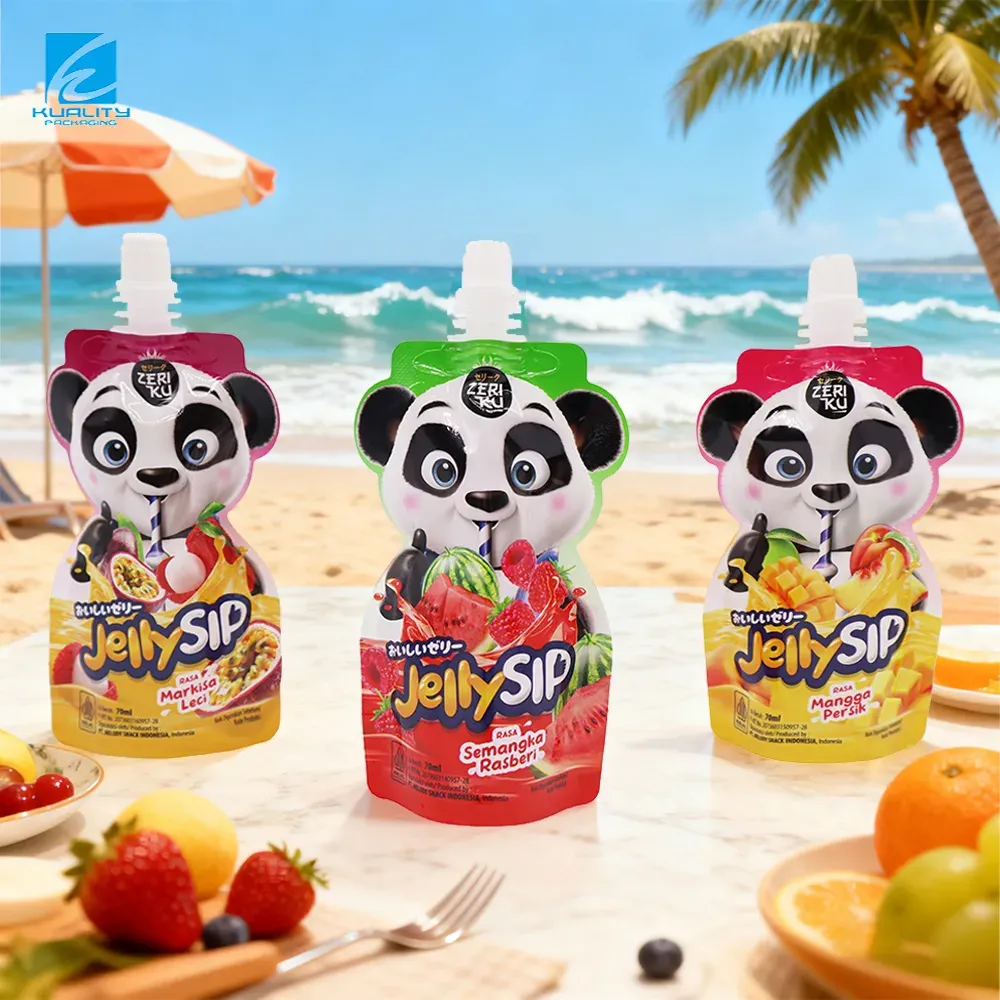
Packaging for children’s drinks has one non-negotiable rule: safety.
Parents may compare ingredients, but as long as the packaging seems even slightly unsafe, they won’t consider buying.
When producing pouches for kids’ beverages, we focus on two main points:
Materials must be stable and flexible, not tearing or cracking when squeezed.
The spout structure must be safe, properly sized so it doesn’t spill everywhere when a child grabs it.
Portions are usually small—easy for children to carry. As for the design, bright colors, friendly patterns, and simple shapes dominate. It’s not a requirement; it’s just what works in the market.
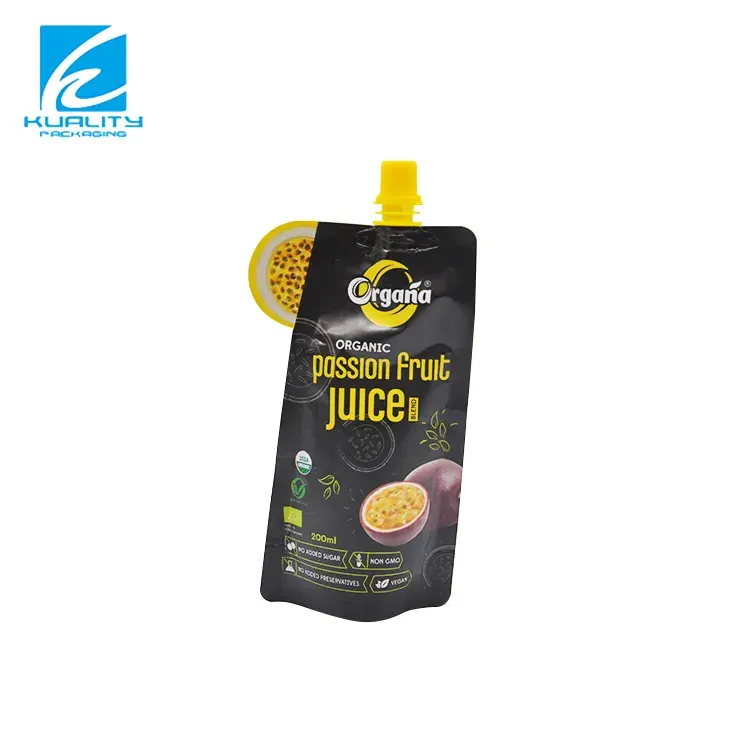
Flexible Beverage Packaging For Fruit Juice Drinks
Fruit juice is one of the most sensitive beverage categories. It reacts quickly to oxygen and light, and the color can darken much faster than people expect. Many new brands assume that a clear pouch is good enough, but transparency alone doesn’t protect the product.
A proper solution involves transparent barrier films, often using EVOH.
These materials maintain clarity while offering oxygen resistance.
For export products or beverages requiring longer shelf life, aluminum foil laminations remain a reliable choice. They’re not transparent, but they stabilize flavor extremely well and tolerate different transportation conditions.
Juices that undergo hot-fill or high-temperature sterilization require heat-resistant film structures, some capable of withstanding up to 121°C. This isn’t a selling point—it’s a necessity.
Why Can’t One Material Work for All Beverages?
Many new brands ask us, “Can’t we just use one material for everything?”
In reality, the answer is no.
Flexible packaging relies on each layer performing a specific function:
One layer handles barrier performance
One provides strength
One handles heat-sealing
One is for printing
Another may be added for temperature resistance
Different beverages have different filling temperatures, viscosities, storage conditions, and transportation environments. Naturally, the material cannot stay the same.
Creating the right packaging is a bit like adjusting a formula—each product needs its own combination.
A Few Final Thoughts
The beverage market continues to grow and split into more categories. With that, the role of flexible beverage packaging is becoming more important—not just as a container, but as part of the product experience itself.
Functional drinks need protection for active ingredients.
Sports drinks must withstand vigorous use.
Kids’ drinks need to be safe, stable, and visually friendly.
Fruit juices need strong protection to maintain freshness.
Once you understand the nature of the product, selecting the right flexible beverage packaging becomes much easier.