


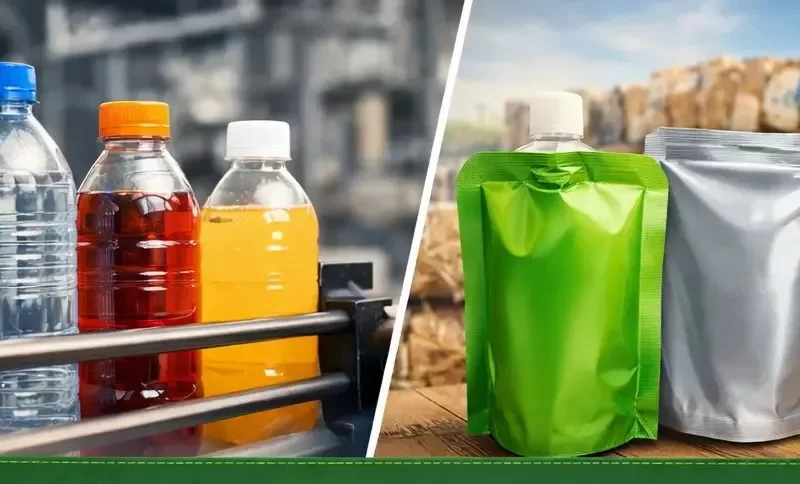
In the past, bottles were the default packaging choice across many industries. Today, that default is changing.
As a professional flexible packaging supplier, 후이양 포장 continues to support bottle-based projects where appropriate. Bottles are familiar, widely accepted, and in some cases still the right solution.
However, when we look at real purchasing behavior from our clients, the direction is clear:
More new projects start with flexible packaging. Fewer start with bottles.
Marketing trends do not drive this shift. It is driven by operational pressure inside modern brands.
Where the Conversation Usually Begins: Cost Pressure
In most discussions, clients do not start by asking about sustainability or visual impact. They start with one simple concern:
Total cost.
Bottles create hidden cost factors that are often underestimated:
- They are heavy, increasing freight expenses
- They ship with empty air space, reducing pallet efficiency
- They require additional protective packaging
- They increase storage and warehouse costs
When brands compare formats side by side, the difference becomes clear.
As a pouch packaging manufacturer, we see immediate improvements when clients switch:
- Flat shipping before filling
- Reduced transportation weight
- Higher pallet utilization
- Lower total landed cost
For many projects, brands improve profitability without changing the product itself.
That is usually the turning point.
Real Usage Matters More Than Appearance
Brand teams used to ask:
“Does this look premium?”
Now they ask:
“How will this be used?”
Rigid bottles often:
- Tip over
- Leak after opening
- Occupy excessive space in refrigerators and bags
- Increase damage rates in e-commerce shipments
Flexible packaging — especially spout pouches and resealable formats — fits better into modern consumption habits.
Brands operating in:
- E-commerce
- Convenience retail
- Subscription models
Frequently report:
- Fewer damaged shipments
- Reduced leakage complaints
- Improved repeat purchase rates
From a commercial perspective, packaging convenience directly impacts business performance.
Sustainability: A Procurement Requirement
In real B2B conversations, sustainability is rarely emotional storytelling. It is increasingly a procurement requirement.
Retailers and distributors now ask for measurable data:
- Packaging weight
- Material reduction
- Transportation emissions
- Recyclability potential
Flexible packaging often performs better simply because it:
- Uses less raw material
- Reduces carbon footprint in transport
- Improves space efficiency across the supply chain
Many brands begin cautiously — launching flexible packaging as:
- Refill packs
- Trial sizes
- Secondary SKUs
Once performance is validated, flexible packaging expansion becomes a supply chain decision, not a branding experiment.
Shelf Life: The Quiet but Critical Advantage
Shelf life is rarely part of marketing campaigns, but internally it is crucial.
Modern flexible packaging solutions use multi-layer high-barrier structures that effectively protect against:
- Oxygen
- Moisture
- Light (if required)
For liquids and semi-liquids, this results in:
- Reduced spoilage
- Improved stability during transportation
- Lower return rates
- Reduced expired inventory
For growing brands, even small improvements in stability can significantly reduce operational risk.
Faster Adjustments, Lower Commitment Risk
Rigid packaging creates structural commitment:
- Mold development
- Tooling costs
- Long lead times
- High minimum order quantities
This slows innovation.
Flexible packaging removes many of these constraints:
- Graphic updates without structural change
- Shorter production cycles
- Smaller test runs
- Lower entry cost for new SKUs
For brands in competitive markets, speed is a strategic advantage.
Many of our clients discover that format flexibility becomes more valuable than initial cost savings.
What We See Across Industries
At Huiyang Packaging, we support projects across:
- Food & beverages
- Personal care
- Pet products
- Household goods
Flexible packaging is no longer limited to entry-level products. It is increasingly adopted by brands that prioritize:
- Operational efficiency
- Scalability
- Risk control
- Supply chain optimization
The most common question we hear today is not:
“Can flexible packaging work?”
It is:
“At what point does sticking with bottles stop making sense?”
Conclusion: Flexible Packaging Fits Modern Business Reality
Bottles still have their place. We continue to support clients who require rigid formats.
But for many brands, bottles are no longer the automatic choice.
From our experience as a professional pouch packaging manufacturer and flexible packaging supplier, pouches offer:
- Lower system-wide logistics costs
- Reduced material consumption
- Better transportation efficiency
- Improved product protection
- Greater agility for growing brands
Flexible packaging aligns with how modern businesses operate — leaner, faster, and more adaptive.
왜 후이양 패키징을 선택해야 할까요?
At Huiyang Packaging, we do more than manufacture pouches. We help brands make smarter packaging decisions.
Our strengths include:
- Advanced multi-layer barrier structure development
- Custom spout pouch and resealable pouch solutions
- Professional support for refill and e-commerce packaging
- Cost-optimized designs to improve total landed cost
- Stable quality control and scalable production capacity
Whether you are transitioning from bottles or launching a new product line, we provide practical, commercially grounded packaging solutions — not just concepts.
If you are evaluating whether flexible packaging makes sense for your product, our team is ready to provide structured analysis and tailored recommendations.
Contact Huiyang Packaging today to explore how flexible packaging can improve your cost structure, logistics efficiency, and long-term scalability.