


Choosing the right packaging material is one of the most critical decisions food brands make before launching or upgrading a product. A high-performance flexible packaging structure does more than create an attractive package—it controls moisture and oxygen, improves seal strength, withstands transportation, and extends shelf life. However, for B2B brands, selecting the correct material depends on complex factors like filling processes, packaging machinery, and target market requirements.
As a leading flexible packaging manufacturer, 惠洋包装 specializes in high-quality OEM/ODMソリューション tailored to these exact challenges. Equipped with advanced high-speed printing, laminating, and pouch-making machinery, we operate a one-stop production system from R&D to final manufacturing.
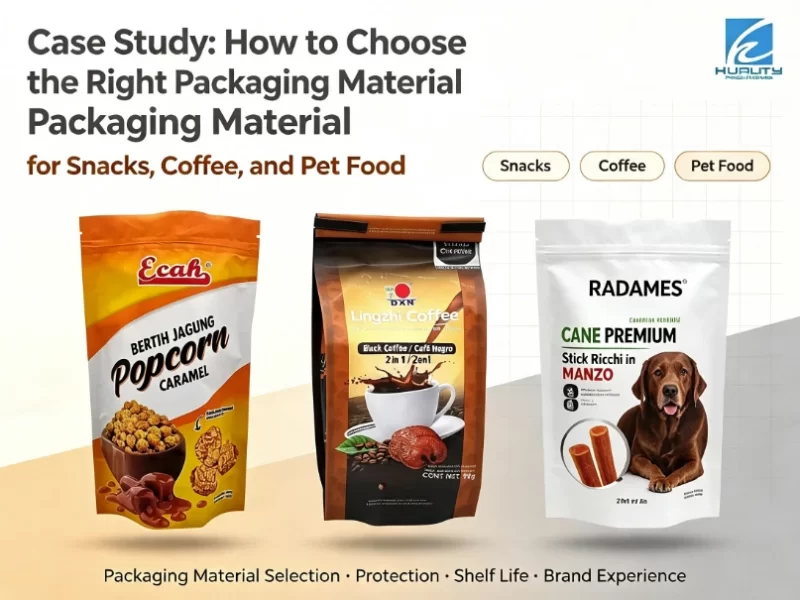
In this case study, we share our expert approach to help you choose the right packaging material for three distinct applications: snacks, coffee, and pet food.
Why You Should Choose the Right Packaging Material
Before selecting a film structure, you should first understand what can cause product deterioration.
The main risks for many food products include:
- Oxygen transmission
- Water vapor transmission
- 光照射
- Aroma loss
- Moisture absorption
- Oil or grease migration
- Puncture and tearing
- Weak or contaminated seals
- Transportation impact
- Incompatible filling or sealing conditions
This is why, to choose the right packaging material, one should begin with product requirements rather than packaging appearance.
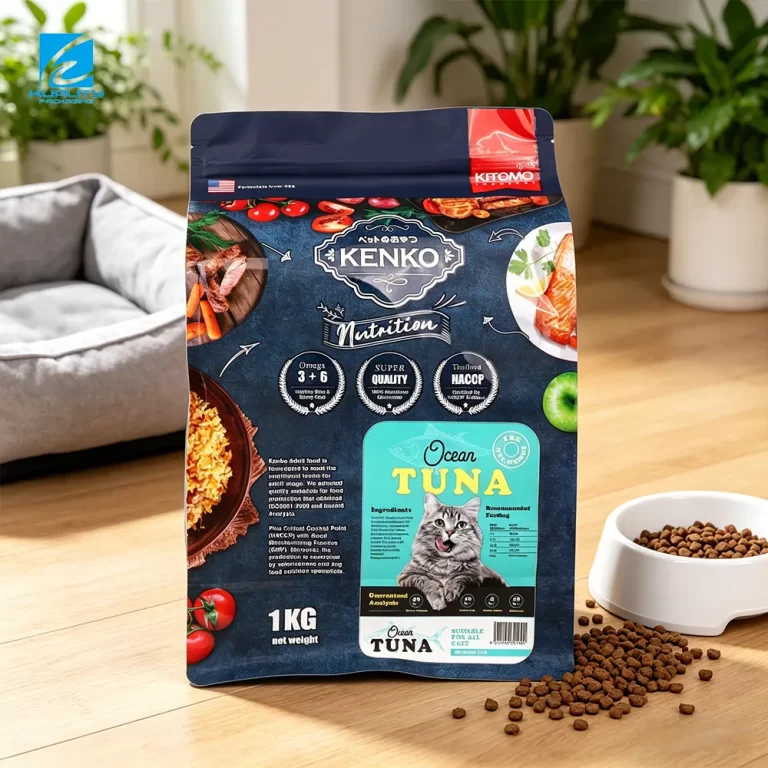
For example, a high-barrier aluminum structure may provide excellent protection, but it may not always be necessary for a short-shelf-life snack. Similarly, a basic PET/PE structure may be cost-effective for some dry products but insufficient for products requiring extended shelf life.
The objective is not to use the most expensive material. The objective is to develop the most appropriate material structure for the product’s actual protection requirements.
Our Packaging Material Selection Framework
When helping food brands choose the right packaging material, we typically evaluate six factors before recommending a structure.
1. Product Characteristics
First, we identify what the product contains and what causes quality deterioration.
Important questions include:
- Is the product moisture-sensitive?
- Is it oxygen-sensitive?
- Does it contain oil or fat?
- Does it release gas after processing?
- Is aroma retention important?
- Is the product sharp or abrasive?
- Does it require extended shelf life?
2. Required Barrier Performance
Barrier performance should be evaluated according to the product’s actual needs.
Two important indicators are:
OTR — Oxygen Transmission Rate
OTR indicates how much oxygen can pass through a packaging material over a defined period. Lower OTR generally means stronger oxygen protection.
WVTR — Water Vapor Transmission Rate
WVTR measures the transmission of water vapor through the packaging material. Lower WVTR generally provides stronger moisture protection.
Therefore, choosing the right packaging material requires more than simply knowing whether a film is called “high barrier.” Buyers should evaluate the actual barrier performance of the proposed structure.
3. Sealing Requirements
A high-barrier film cannot perform properly if the package has a weak seal.
The packaging structure should therefore be compatible with:
- Filling temperature
- Sealing temperature
- Sealing pressure
- Dwell time
- Product contamination risk
- Packaging machine speed
Seal strength and seal integrity are particularly important for products that travel long distances or are packaged at high production speeds.
4. Mechanical Performance
Packaging must survive the entire supply chain.
Depending on the application, buyers should consider:
- Tensile strength
- Tear resistance
- 耐パンク性
- Drop performance
- Flex-crack resistance
- Bag construction
- Transportation and stacking conditions
This factor becomes especially important for large pet food bags and products distributed through complex logistics networks.
5. Packaging Equipment
A material structure that performs well in laboratory testing may still cause problems if it does not run properly on the customer’s packaging equipment.
Before you choose the right packaging material, we recommend confirming:
- VFFS or HFFS equipment
- Filling speed
- Sealing system
- Forming method
- Bag dimensions
- Roll film or premade bag requirements
- Temperature range
- Production volume
Material selection and machine compatibility should therefore be considered together.
6. Cost and Market Positioning
Cost should be evaluated based on total packaging performance rather than material price alone.
A lower-cost structure can become more expensive if it causes:
- Product spoilage
- Shorter shelf life
- Leakage
- Customer complaints
- Packaging waste
- Product returns
- Production downtime
The best way to choose the right packaging material is to balance protection, manufacturing performance, product value, and target shelf life.
Case Study 1: Snack Packaging Material Selection
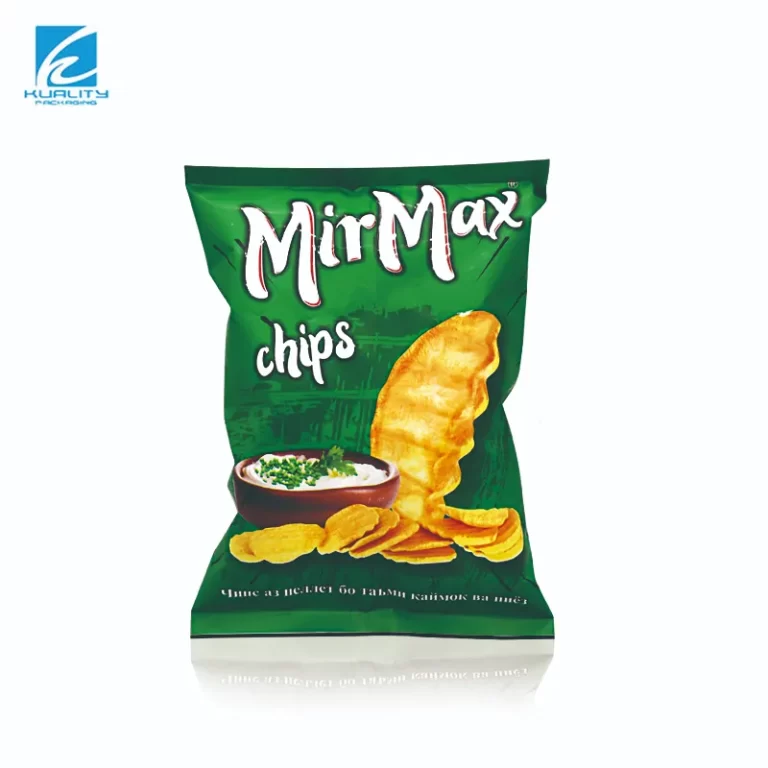
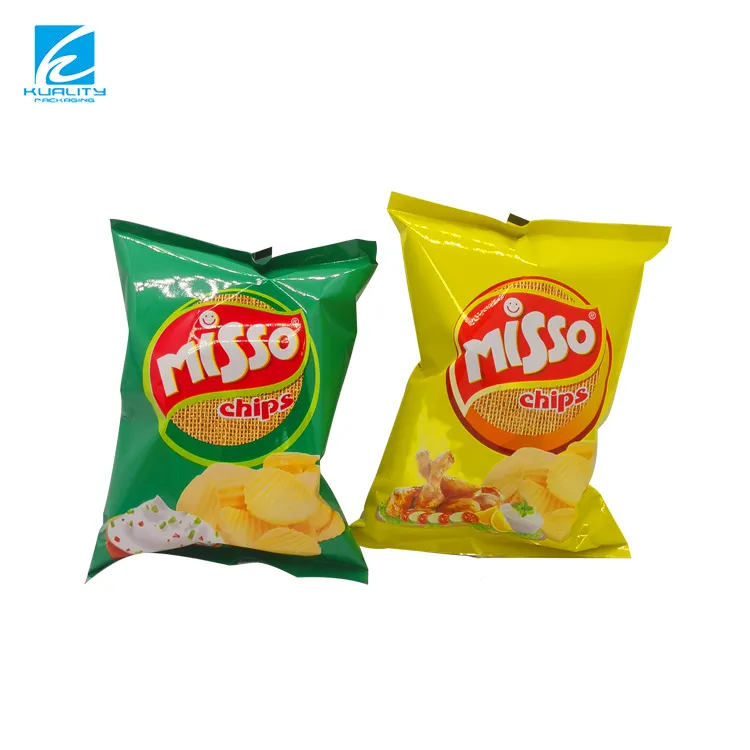
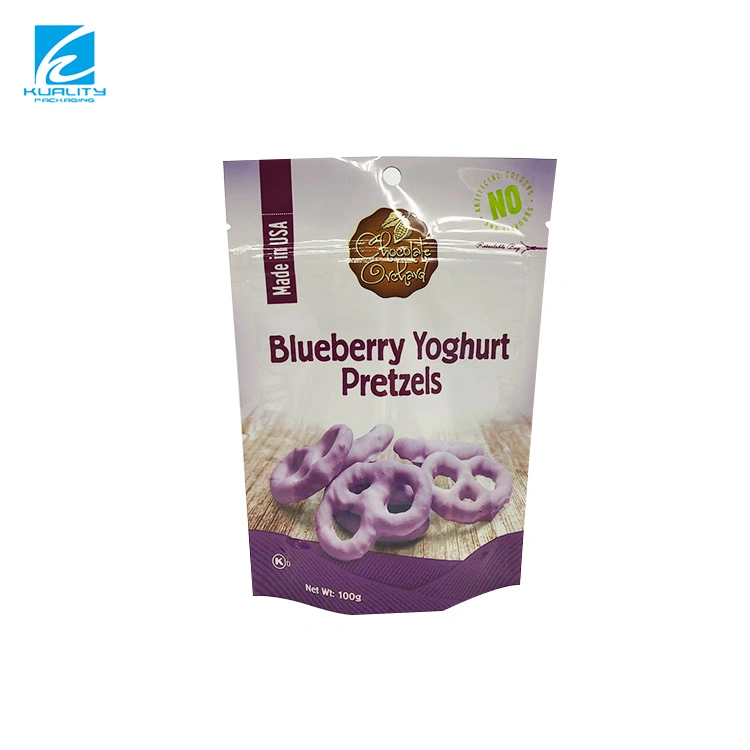
Product: Potato Chips and Dried Snacks
Customer Challenge
A snack brand was experiencing quality problems during long-distance transportation. After extended storage and shipping, some products were losing their original crisp texture.
For moisture-sensitive snacks, water vapor can be one of the most important causes of quality deterioration. Oxygen can also contribute to oxidation, particularly for snacks containing oils or fats.
To choose the right packaging material, the first step was therefore to identify moisture and oxygen protection requirements instead of focusing only on printing and appearance.
Recommended Structure: BOPP / PET / PE
For this application, a BOPP/PET/PE structure was considered as a practical option where the required shelf life and barrier targets could be met.
BOPP outer layer
BOPP can provide:
- Good printability
- Attractive surface appearance
- Surface protection
- Good stiffness and handling characteristics
PET middle layer
PET can contribute:
- Mechanical strength
- Dimensional stability
- Structural support
- Reliable performance during high-speed packaging
PE inner layer
PE is commonly used as a sealant layer because it can provide:
- Heat-sealing performance
- Package integrity
- Flexible inner contact surface
However, the exact film grades and thicknesses should be selected according to the required OTR, WVTR, seal strength, machine conditions, and shelf life.
An Important Packaging Insight
Not every snack requires an aluminum foil structure.
For products with moderate shelf-life requirements, a well-designed polymer structure may provide a better balance between cost, performance, appearance, and production efficiency.
For highly moisture- or oxygen-sensitive snacks requiring extended shelf life, however, a metallized or foil-based barrier structure may be more appropriate.
Therefore, to choose the right packaging material means matching the barrier level to the product rather than automatically selecting the highest-barrier option.
Additional Considerations for Snack Packaging
Snack brands should also evaluate:
- Nitrogen flushing requirements
- Headspace oxygen
- Product oil content
- Bag size
- Transportation distance
- Expected shelf life
- Seal contamination
- 耐パンク性
For potato chips and other fragile snacks, the packaging system should protect not only against moisture and oxygen but also against crushing during transportation.
Case Study 2: Coffee Packaging Material Selection
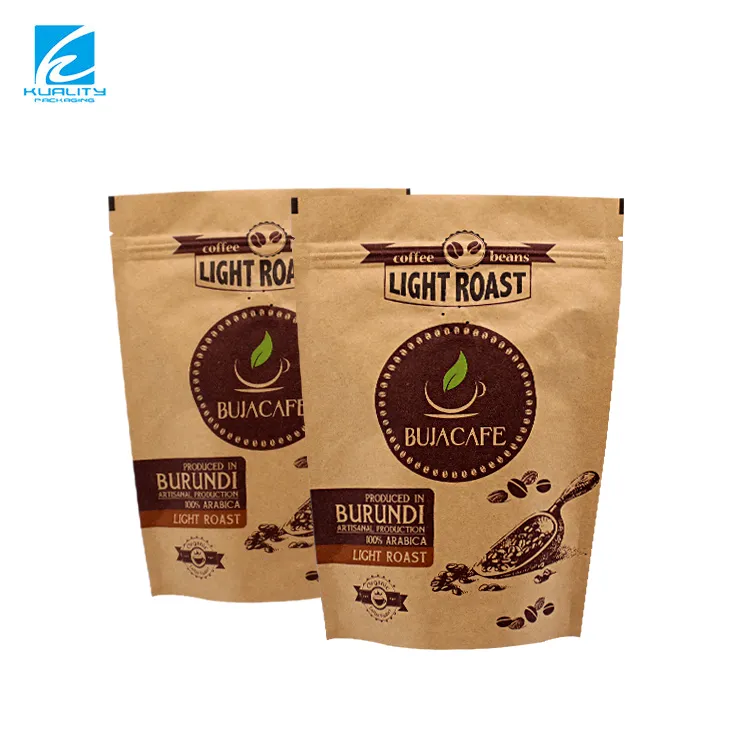
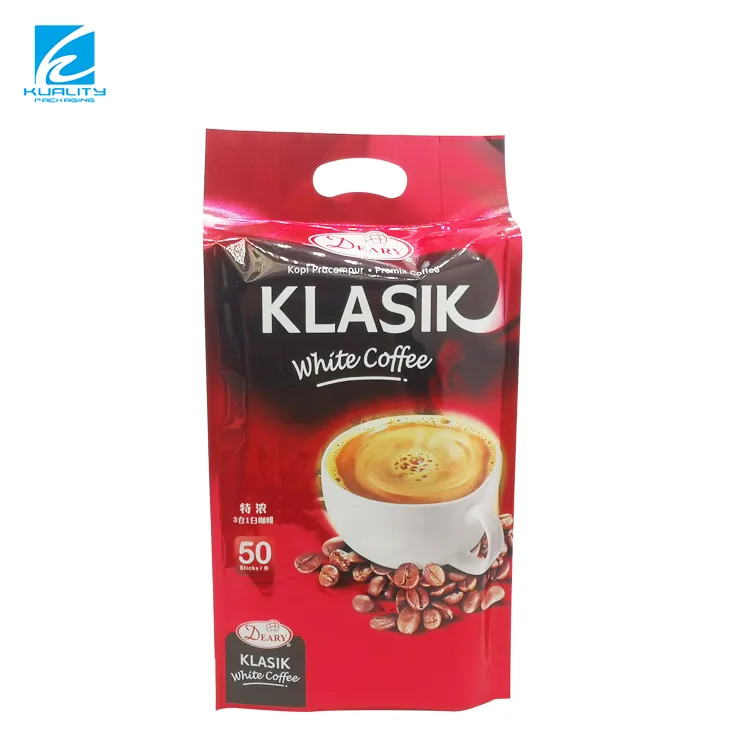
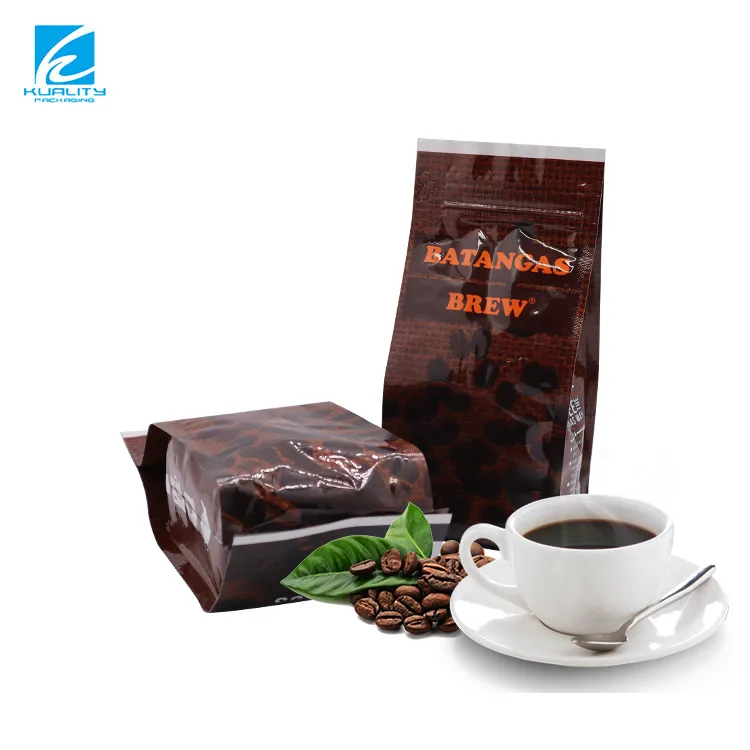
Product: Roasted Coffee Beans
Customer Challenge
A coffee brand found that its roasted coffee gradually lost aroma after several months.
Coffee is particularly sensitive to packaging because roasted beans continue releasing carbon dioxide after roasting while also being vulnerable to oxygen exposure.
For premium coffee, it is essential to choose the right packaging material with consideration of both barrier performance and gas management.
Recommended Structure: PET / AL / PE with One-Way Valve
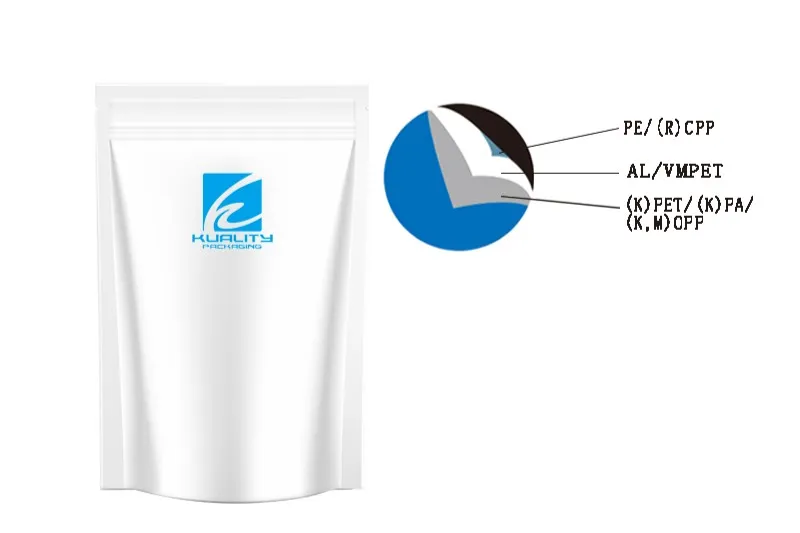
For coffee requiring strong protection, we recommend a PET/AL/PE structure combined with a one-way degassing valve.
PET outer layer
PET can provide:
- Good mechanical strength
- Dimensional stability
- Reliable printing performance
- Surface protection
Aluminum barrier layer
The aluminum layer provides strong protection against:
- 酸素
- 水分
- Light
- Aroma loss
This makes aluminum-based structures particularly useful for premium roasted coffee with demanding shelf-life requirements.
PE inner layer
The PE layer functions as the heat-sealable inner layer and helps create reliable package seals.
Why a One-Way Valve Matters
Material selection alone does not solve every coffee packaging problem.
Freshly roasted coffee releases carbon dioxide. A one-way valve allows gas generated inside the package to escape while helping prevent external air from entering.
This is why when you choose the right packaging material for coffee, you should consider it together with the valve, bag design, sealing process, filling conditions, and expected shelf life.
Is Aluminum Always Necessary?
Not necessarily.
For some coffee products, metallized film or other high-barrier structures may provide a suitable balance of protection and cost.
The correct choice depends on:
- Coffee type
- Roast level
- Whole bean or ground coffee
- Expected shelf life
- Oxygen sensitivity
- Distribution environment
- Premium positioning
- Packaging format
For high-value coffee products with long distribution cycles, stronger barrier protection can justify the additional packaging cost.
Case Study 3: Pet Food Packaging Material Selection
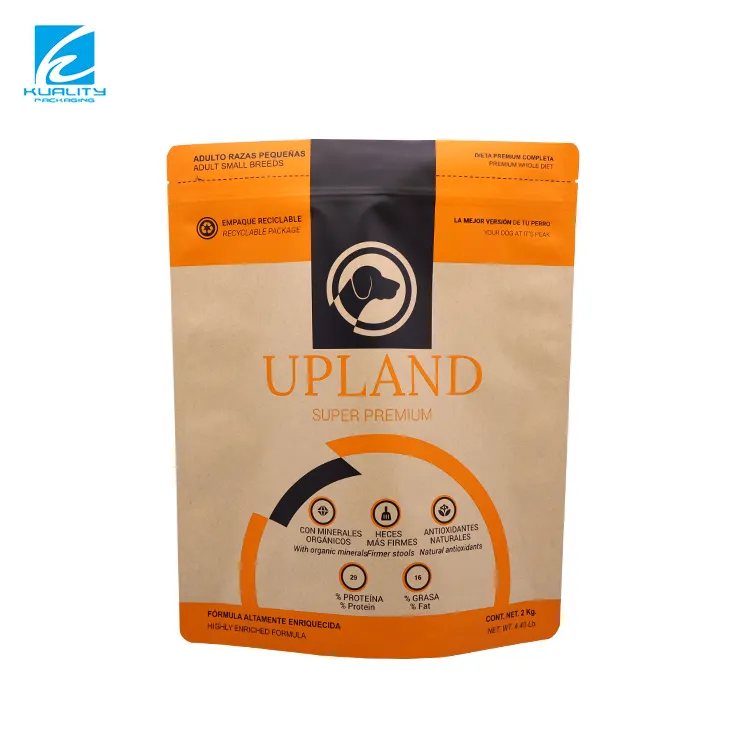
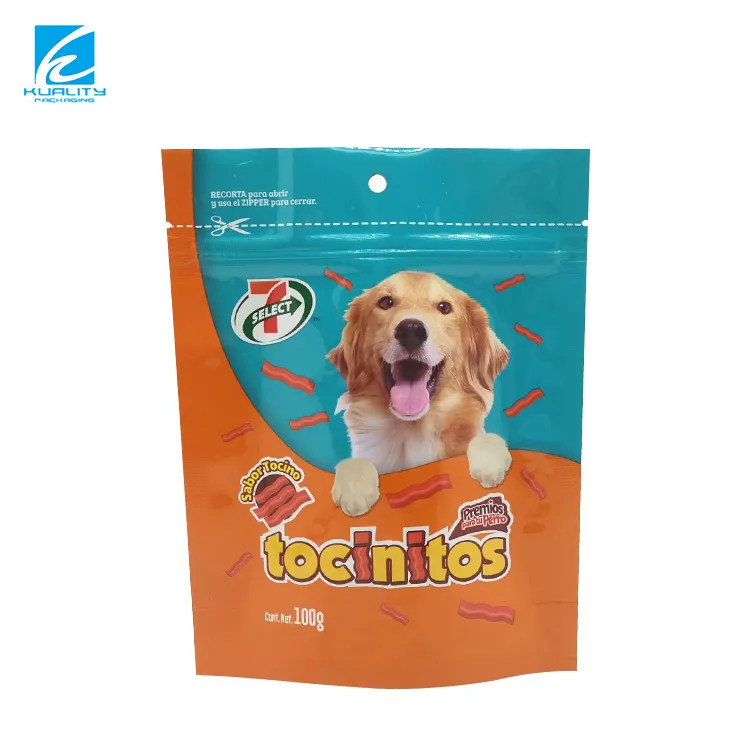
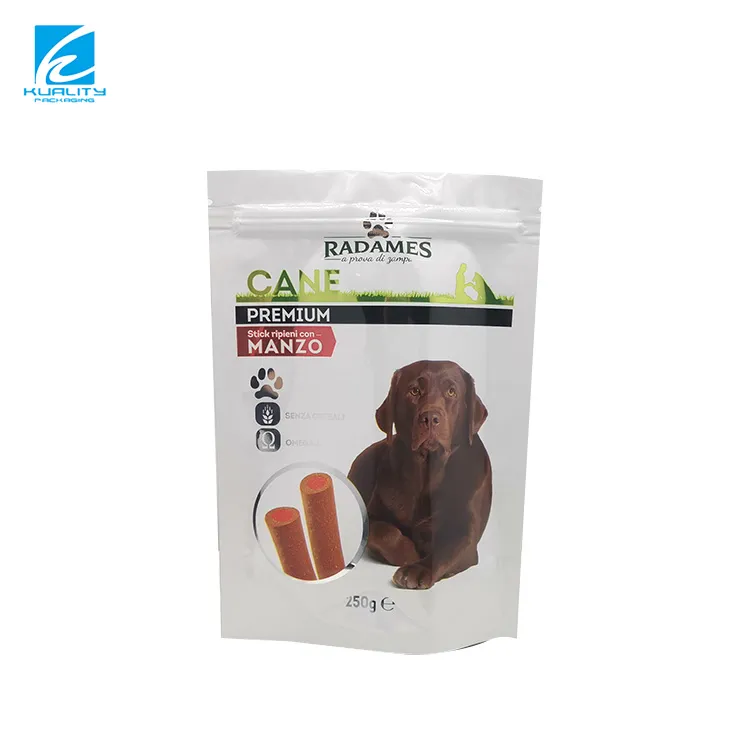
Product: Dry Pet Food
Customer Challenge
A pet food manufacturer required stronger packaging performance because the bags were exposed to repeated handling, stacking, transportation pressure, and potential puncture during logistics.
When attempting to choose the right packaging material for this application, protection went beyond shelf life—mechanical strength and seal integrity were equally important.
Recommended Structures: PET / PE or PET / AL / PE
Depending on shelf-life and barrier requirements, we recommended either PET/PE or PET/AL/PE.
PET/PE
This structure may be suitable when the product requires:
- Good mechanical strength
- Moisture protection
- Reliable heat sealing
- Cost-effective packaging performance
PET/AL/PE
Where stronger barrier protection is required, an aluminum-based structure can provide improved protection against oxygen, moisture, and light.
Key Performance Requirements
Pet food packaging should be evaluated for:
- シール強度
- 耐パンク性
- Tear resistance
- Moisture protection
- Odor retention
- Mechanical durability
- Bag size and weight
- Transportation conditions
For large pet food bags, mechanical performance becomes particularly important because a heavier package creates greater stress during lifting, stacking, and transportation.
A Practical Buying Tip
When buyers choose the right packaging material for pet food, they should not evaluate only the film structure.
They should also consider the complete package design, including:
- Bag dimensions
- Bottom construction
- Handle design
- Seal width
- Opening method
- Zipper requirements
- Filling weight
A well-selected material structure combined with an appropriate bag construction can significantly improve overall package durability.
Comparing the Three Packaging Solutions
| 製品 | Main Risks | Example Structure | Key Packaging Priorities |
|---|---|---|---|
| Potato chips & dried snacks | Moisture, oxygen, crushing | BOPP/PET/PE | Moisture control, seal integrity, mechanical protection |
| Roasted coffee | Oxygen, light, aroma loss, gas release | PET/AL/PE + valve | High barrier, aroma protection, degassing |
| Dry pet food | Moisture, puncture, tearing, handling | PET/PE or PET/AL/PE | Strength, sealing, barrier protection |
This comparison shows why there is no universal material structure for every food product.
When looking to choose the right packaging material, the ultimate goal is to identify the minimum performance level required to protect the product throughout its intended supply chain.
How to Choose the Right Packaging Material: A Buyer Checklist
Before requesting a quotation from a flexible packaging supplier, buyers should prepare the following information:
Product Information
- Product name and type
- Moisture sensitivity
- Oxygen sensitivity
- Fat or oil content
- Aroma requirements
- Gas release characteristics
Shelf-Life Requirements
- Target shelf life
- Expected storage conditions
- Ambient or temperature-controlled distribution
- Domestic or international transportation
Packaging Requirements
- Bag type
- Bag dimensions
- Filling weight
- Zipper requirement
- Valve requirement
- Handle requirement
- Transparent window or no window
- Matte or glossy finish
Production Requirements
- Packaging machine type
- Filling speed
- Sealing temperature
- Roll film or premade bag
- Estimated order quantity
Performance Requirements
- OTR target
- WVTR target
- シール強度
- 耐パンク性
- Tear resistance
- Drop or transportation testing
Providing this information allows a packaging manufacturer to recommend a structure based on measurable requirements rather than guesswork.
Why the Cheapest Packaging Material Is Not Always the Best Choice
Packaging buyers often compare suppliers based on price per kilogram or price per bag.
However, material cost should not be considered independently of product protection.
For example, a lower-cost material may initially reduce packaging expenses but create higher total costs through:
- Reduced shelf life
- Product quality complaints
- Leakage
- Transportation damage
- Higher product returns
- Repacking
- Brand reputation problems
When looking to choose the right packaging material, a more appropriate evaluation method is to compare the total packaging value.
A useful evaluation formula is:
Packaging Value = Protection + Production Performance + Logistics Durability + Shelf-Life Support − Total Risk
The objective is not necessarily to choose the thickest or most expensive film. It is to select a structure that delivers the required performance at an economically reasonable cost.
How a Flexible Packaging Manufacturer Can Help
An experienced flexible packaging manufacturer can help buyers move from a general packaging requirement to a practical material structure.
The process should include:
Step 1: Understand the product
Identify moisture, oxygen, aroma, oil, and mechanical sensitivity.
Step 2: Define performance targets
Establish expected shelf life, barrier requirements, seal performance, and transportation conditions.
Step 3: Recommend material structures
Compare polymer, metallized, and aluminum-based options based on actual requirements.
Step 4: Confirm machine compatibility
Review filling, forming, and sealing conditions before mass production.
Step 5: Test the packaging
Where appropriate, evaluate seal strength, barrier performance, puncture resistance, drop performance, and package integrity.
Step 6: Optimize for production
Balance material cost, production efficiency, product protection, and target market positioning.
When you use this systematic approach to choose the right packaging material, the decision becomes more predictable and less reliant on price or appearance alone.
よくある質問
Q1: What is the most important factor when you choose the right packaging material?
There is no single factor that applies to every product. To choose the right packaging material, product sensitivity, required shelf life, OTR, WVTR, seal performance, mechanical strength, packaging equipment, and transportation conditions should all be evaluated together.
Q2: What packaging material is best for potato chips?
The appropriate structure depends on the required shelf life and barrier targets. Polymer-based structures such as BOPP/PET/PE may be suitable for some applications, while metallized or foil-based structures may be considered for products requiring stronger oxygen and moisture protection.
Q3: What is the best packaging material for roasted coffee?
Coffee commonly requires strong oxygen and light protection. PET/AL/PE combined with a one-way degassing valve is one high-barrier option, while other metallized or high-barrier structures may also be appropriate depending on shelf-life and cost requirements.
Q4: Should pet food packaging use aluminum foil?
Not always. PET/PE may be sufficient for certain dry pet food applications, while PET/AL/PE can be considered when stronger oxygen, moisture, or light protection is required. The correct structure should be determined by shelf-life and performance targets.
Q5: How can I reduce packaging costs without sacrificing product quality?
Instead of simply selecting a thinner or cheaper film, compare the required barrier and mechanical performance with different material structures. Working with an experienced manufacturer will help you choose the right packaging material structure that meets performance targets while optimizing costs.
Conclusion: Choose Packaging Based on Performance, Not Appearance
There is no single flexible packaging structure that works for every food product.
Snacks may prioritize moisture protection and mechanical protection. Coffee may require high oxygen and light barriers together with controlled gas release. Pet food may require a stronger balance of barrier performance, seal strength, and puncture resistance.
The key to choosing the right packaging material is to start with the product and supply chain, define measurable performance requirements, and then select the most suitable material structure.
Choose Huiyang: Reliable Flexible Packaging That Scales Your Business
Choosing the right flexible packaging partner is just as important as selecting the right packaging material. With over 25 years of manufacturing experience, Huiyang Packaging specializes in OEM/ODM flexible packaging solutions for global food and consumer goods brands. Our advanced high-speed printing, laminating, and bag-making production lines, combined with an integrated service covering material R&D, packaging design, engineering support, and manufacturing, enable us to deliver reliable, high-performance packaging tailored to your products.
Looking for the right packaging solution for your snacks, coffee, pet food, or other food products? We welcome you to contact our experienced packaging specialists. Simply share your product type, bag dimensions, filling weight, target shelf life, filling process, and any special packaging requirements. Our team will recommend the most suitable material structure, optimize your packaging performance, and develop a customized solution that supports product protection, production efficiency, and long-term brand growth.