


-1-750x600.webp)
Emballage til snacks is not one-size-fits-all. Chips, nuts, and baked snacks fail in different ways, so they need different packaging structures, barrier levels, and manufacturing controls. A good snack packaging solution is not just about putting the product into a bag. It is about protecting texture, controlling oxidation, preventing moisture damage, and improving shelf performance.
For wholesalers and brand owners, the real goal is simple: match product characteristics with the right packaging structure, then execute it correctly at the factory level.
Different Emphasis on Different Snack Packaging Solution
Different snacks have different weak points.
- Chips break easily and go stale fast.
- Nuts are oil-rich and oxidize quickly.
- Baked snacks are highly sensitive to moisture and can turn soft.
That means each category needs its own snack packaging solution. If the packaging structure is wrong, the product quality suffers even before it reaches the consumer. In practice, packaging design must start from the product itself, not from a generic bag format.
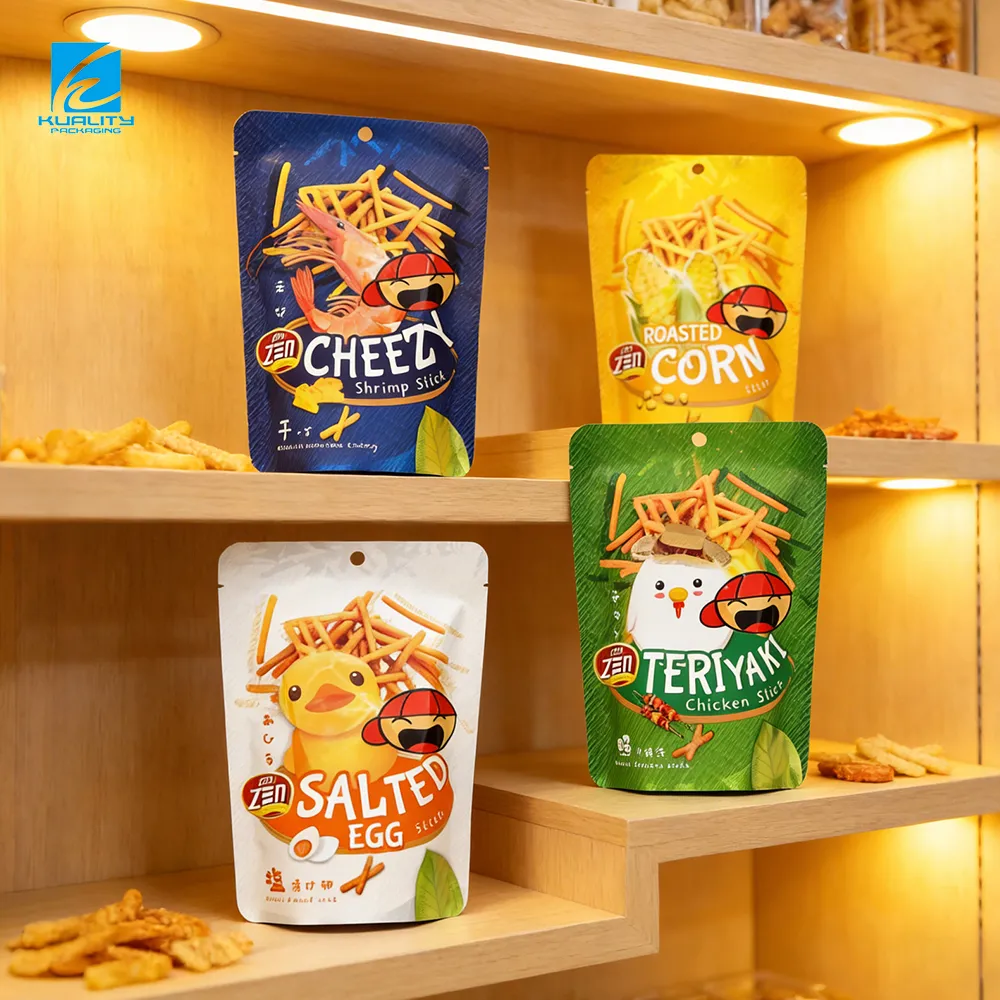
Snack Packaging Solution: Chips, Focus on Cushioning and Oxygen Protection
Core requirements for chips packaging
Chips need three things most:
- Cushioning to prevent breakage during transport
- Low oxygen exposure to preserve crispness
- Moisture resistance to avoid staleness
Because chips are often impulse purchases, appearance also matters. The package must grab attention quickly on the shelf while protecting the product inside.
How manufacturers optimize chip packaging
1. High-barrier material structure
Common structures include:
- BOPP / VMCPP
- MET PET-based laminates
The factory must control OTR og MVTR to keep chips crisp. This usually means selecting high-barrier films and validating them in the lab before mass production.
2. Nitrogen flushing and bag structure design
Nitrogen flushing creates space inside the pouch and helps protect chips from breakage. A pillow bag structure is commonly used because it balances cushioning and cost.
Factory control points include:
- gas fill ratio
- sealing temperature
- internal pressure balance
If these are not tuned correctly, the bag can burst or leak during distribution.
3. Seal strength and burst resistance
Chip packaging must survive vibration, stacking, and drop impact.
Factories improve performance through:
- heat seal curve optimization
- burst testing
- drop testing
4. Printing and shelf impact
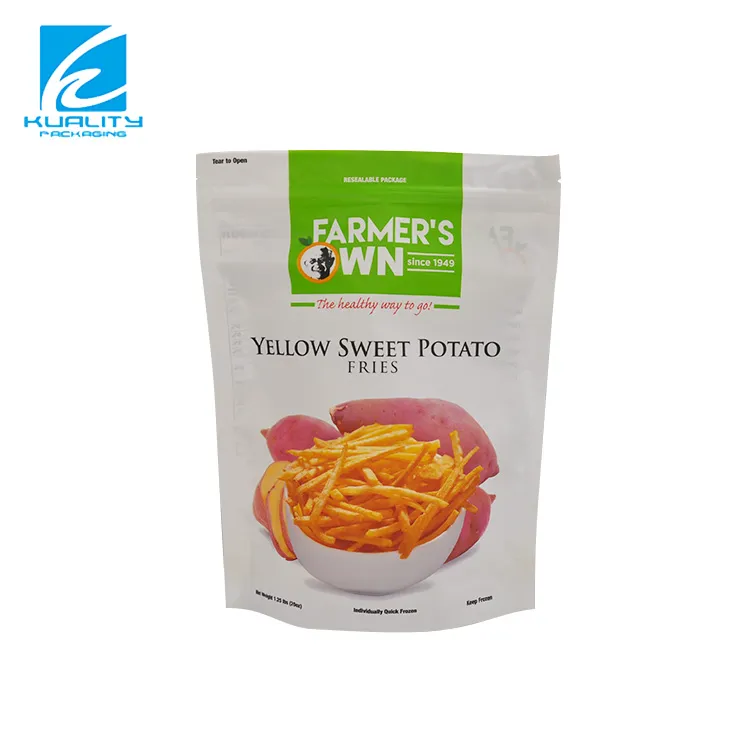
Chips are highly visual products. High-saturation printing, matte-gloss contrast, and strong brand graphics help the pack stand out in crowded retail environments.
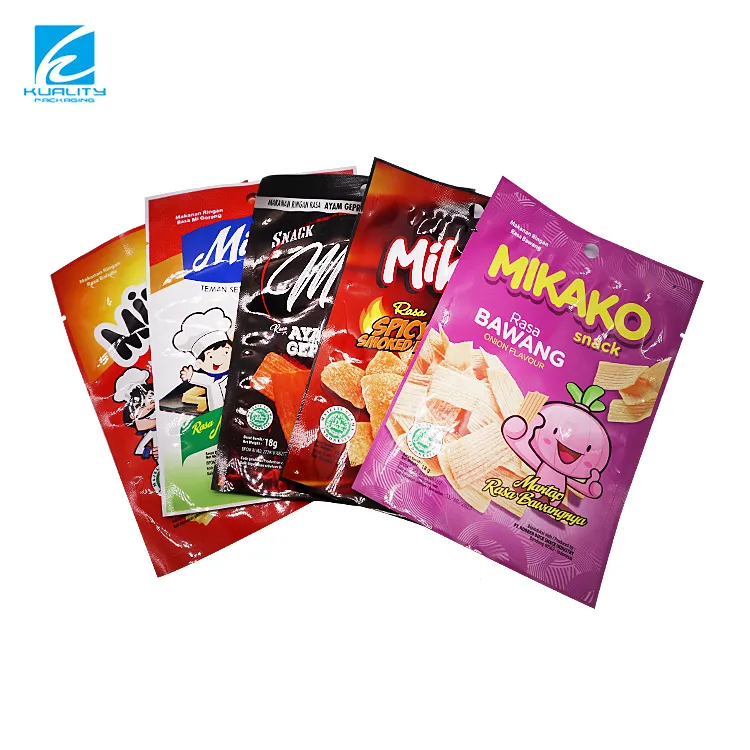
Snack Packaging Solution: Nuts, Focus on Oxidation Control and Shelf Life
Core requirements for nuts packaging
Nuts have a different failure mode. Their fat content makes them highly sensitive to oxidation.
The key requirements are:
- oxygen protection
- moisture protection
- light blocking
- resealable convenience
A strong snack packaging solution for nuts must therefore extend shelf life and preserve flavor.
How manufacturers optimize nuts packaging
1. Ultra-high barrier structures
Typical structures include:
- PET / AL / PE
The aluminum layer blocks both oxygen and light very effectively. Manufacturers must control lamination quality and verify barrier performance through OTR testing.
2. Vacuum or nitrogen packaging
To reduce oxidation, factories may use vacuum sealing or nitrogen flushing.
This requires:
- compatible filling equipment
- stable package structure
- packaging integrity testing
3. Resealable features
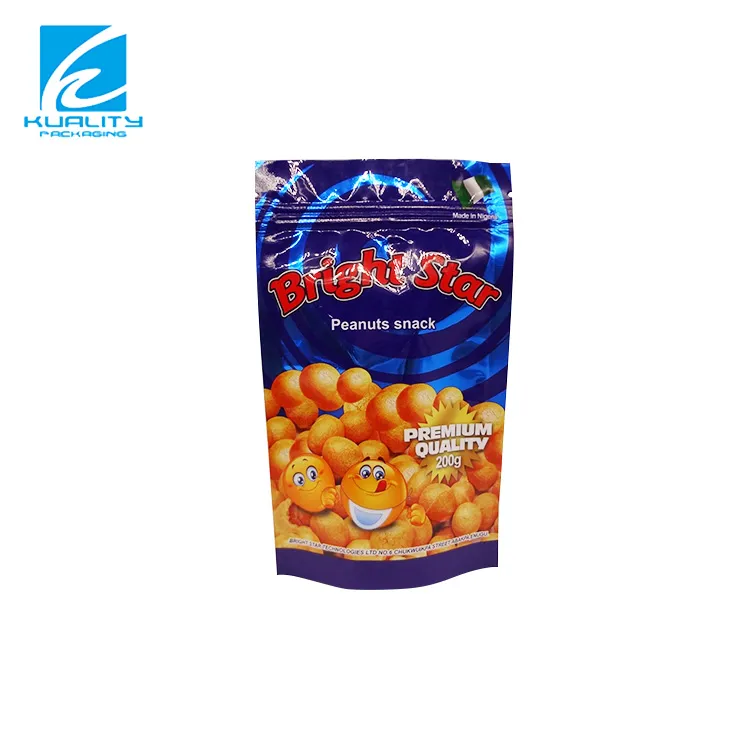
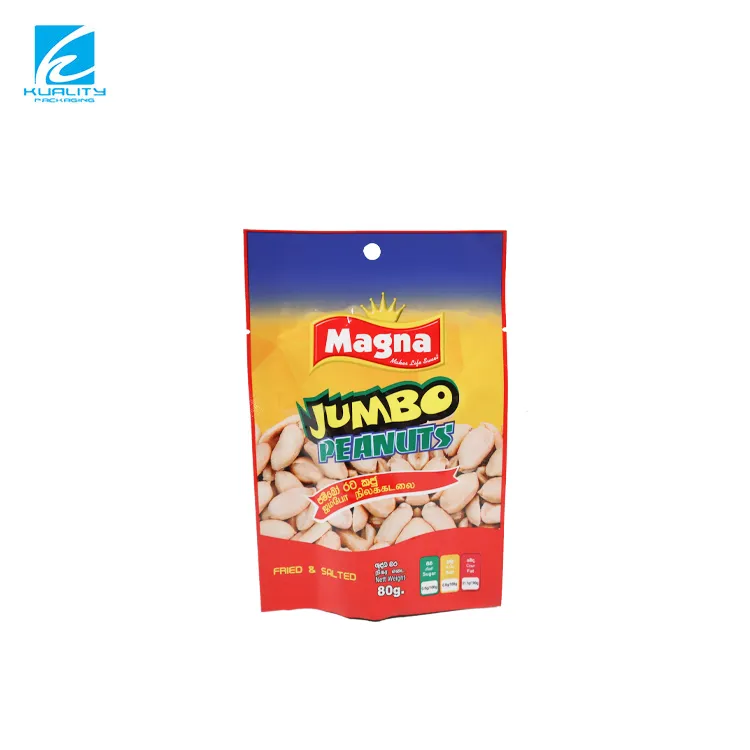
Zipper pouches are especially useful for nuts because they support repeat use after opening.
Manufacturers must test:
- zipper sealing performance
- open-close durability
- overall seal stability
4. Food safety and oil resistance
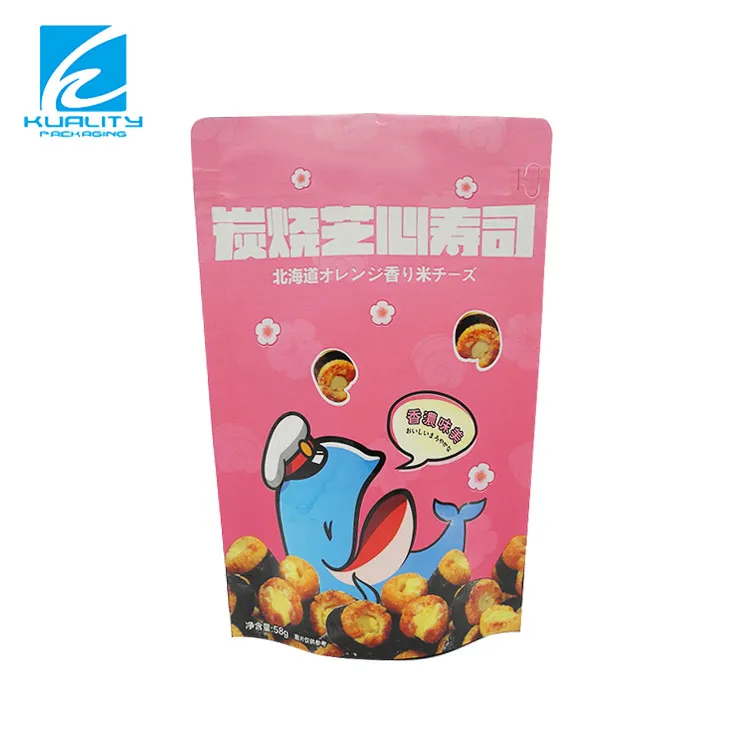
Because nuts contain natural oils, packaging must resist grease migration. That requires proper inner-layer selection, food-grade inks, and low-migration adhesives.
Snacks Packaging Solution: Baked Snack, Focus on Moisture Control and Freshness
Core requirements for baked snacks packaging
Baked snacks usually fail because they absorb moisture.
The most important requirements are:
- moisture barrier
- structure protection
- stable shelf life
- moderate oxygen control
For this category, the best snack packaging solution is one that keeps the product crisp without making the pack too expensive.
How manufacturers optimize baked snacks packaging
1. Moisture barrier optimization
Moisture control is the top priority. Manufacturers adjust:
- film thickness
- layer count
- barrier material selection
MVTR is the key number to watch.
2. Structural protection
Some baked snacks benefit from a carton plus pouch combination, especially when the product is fragile. This improves transport safety and shelf presentation.
Factories support this through:
- package structure design
- drop testing
- stacking simulation
3. Portion packaging strategy
Single-serve baked snack packs are growing fast. They help with convenience, freshness, and portion control.
That requires factories to support:
- multiple pack sizes
- fast line changeovers
- high-speed filling systems
4. Clean label and printing safety
Health-oriented snacks often need safer printing systems. Water-based ink is increasingly used because it lowers VOC emissions and supports more sustainable production.
Factories also improve safety with solvent-free lamination where possible.
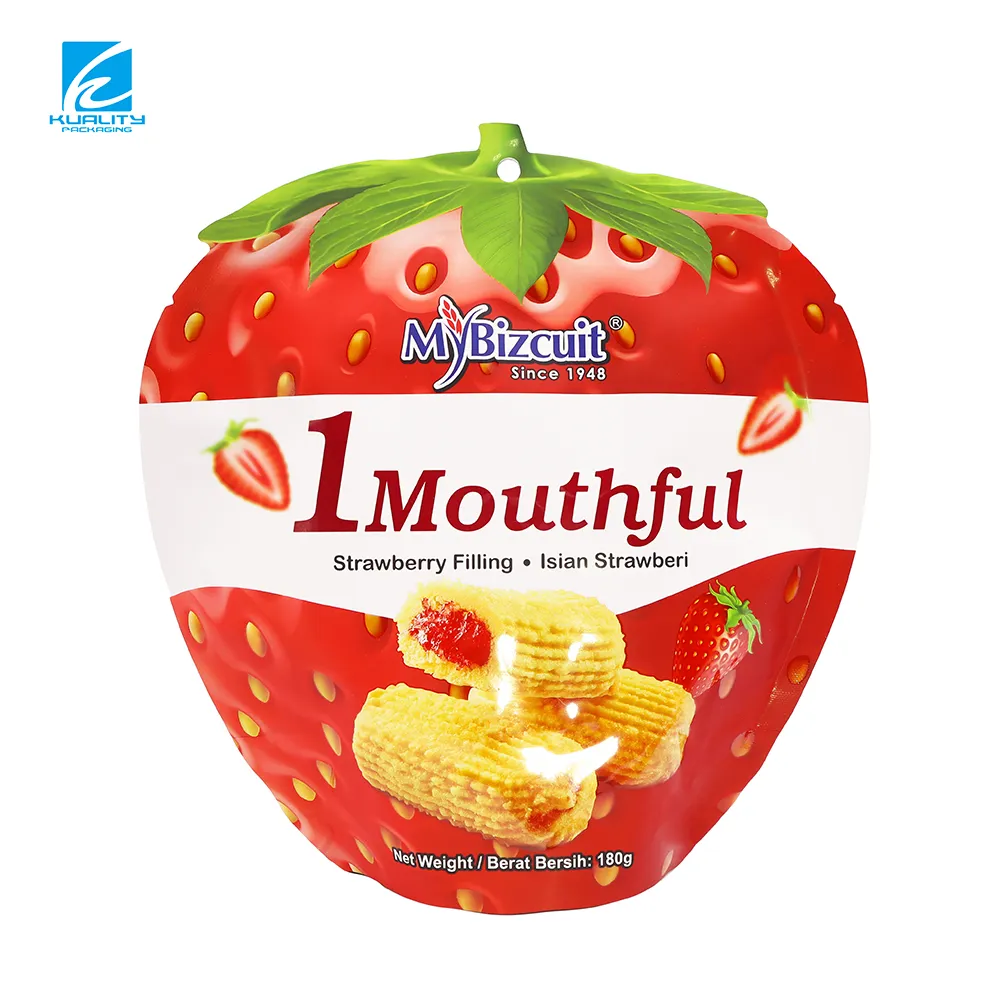
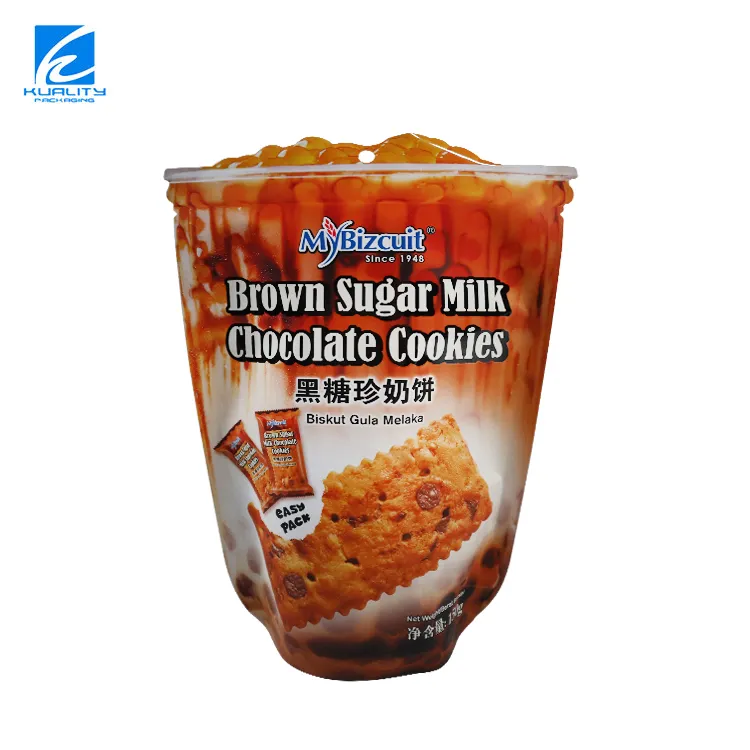
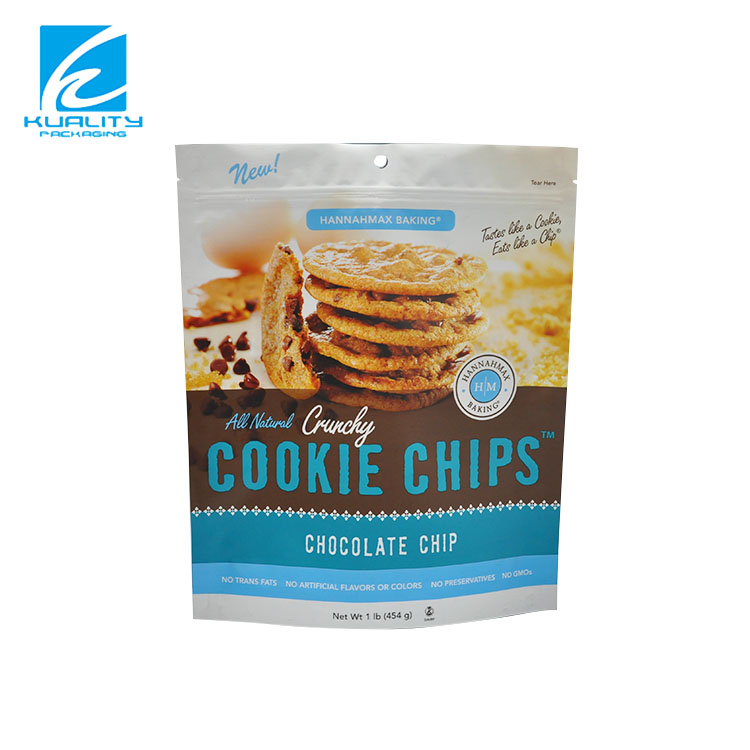
Cross-category Manufacturing Capabilities That Matter
No matter the snack type, a reliable factory should provide the following:
Quality control system
A serious supplier needs:
- IQC for incoming materials
- IPQC during production
- OQC before shipment
- batch traceability
Flexible production and MOQ
Buyers often need multiple SKUs and smaller runs. The factory should support fast line changeovers and reasonable MOQ flexibility.
Customization and OEM support
The best manufacturers support full customization:
- size
- structure
- printing
- barrier level
- sealing features
They should also provide sampling and pilot production before mass order release.
Conclusion: Product-specific Packaging Drives Competitive Advantage
Snack packaging is not generic. Chips, nuts, and baked snacks all fail differently, so each requires a different snack packaging solution.
- Chips need cushioning and oxygen protection.
- Nuts need oxidation control and resealability.
- Baked snacks need moisture resistance and freshness retention.
The factory’s role is to turn these risks into controllable packaging structures and reliable production processes. Choosing the right manufacturer reduces waste, improves shelf performance, and supports repeat purchases.
Visit Huiyang’s Factory
Som en professional custom snack packaging manufacturer, Huiyang Emballage offers tailored snack packaging solutions for B2B clients. With certified production systems and strict quality control, we ensure compliance, product safety, and consistent performance. The company works closely with customers to solve technical challenges such as barrier optimization, sealing reliability, and shelf-life extension.
Supported by integrated manufacturing capabilities, OEM/ODM snack packaging solution services at Huiyang Packaging are available, including customized structures, materials, and printing, helping brands achieve reliable packaging performance and stronger market competitiveness.